


Organic vs. Synthetic: Selecting a Liquid Fertilizer for Hydroponics System
- Efat Elahi
- Dec 3, 2025
- 4 min read

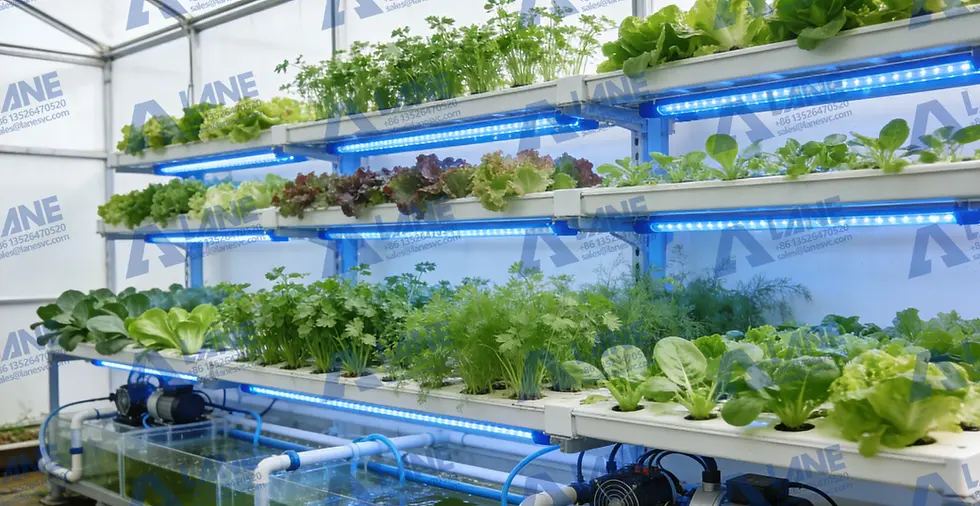
Hydroponic systems rely entirely on liquid fertilizer for hydroponics system to deliver essential nutrients. Choosing the right liquid fertilizer for hydroponics system is a foundational decision that impacts plant health, yield, and philosophy of your garden. Making the choice between organic and synthetic solution is an important decision for the farmers.
Both organic and synthetic solutions can feed the plant in different ways. While both aim to nourish plants, their composition, performance, and environmental impact differ significantly. With the expertise of LANE Heavy Industry Co.,LTD this guide will help you understand these dynamics.
Understanding the Core Difference: Chemistry vs. Biology
The primary difference between synthetic vs organic liquid fertilizer for hydroponics system is how plants access nutrients.
Synthetic Liquid Fertilizer for Hydroponics System:
It is also known as mineral nutrients. These raw materials are chemically refined salts or mined unrefined stones. They provide nutrients in an inorganic, ionic form that plant roots can absorb directly. This creates a highly efficient, fast-acting, and predictable food source.
Organic Liquid Fertilizer for Hydroponics System:
Organic Liquid Fertilizer for Hydroponics System is made from plant, animal, or mineral sources. They contain complex organic molecules that are not directly available to plants. They require beneficial microbes to break them down into the same inorganic ions that synthetic formulas provide. In hydroponics, this microbial ecosystem must be carefully maintained within the system itself.
Synthetic Fertilizers: Precision & Performance
Pros:
Precision & Control: This fertilizer offers exact NPK ratios and micronutrient profiles. You can provide specific formulas for vegetative growth or flowering.
Immediate Availability: Nutrients are readily available. This leads to rapid growth of plants.

Stability & Cleanliness: The formulas are stable and don’t contain any pathogens. They are less likely to clog delicate irrigation lines or pumps.
Predictability: Products are consistent. Every drop contains the same amount of fertilizer. This is crucial for commercial production.
Cons:
Salt Buildup: Salts can easily build up with synthetic fertilizers. You need to regularly monitor EC and change reservoir to prevent root burn.
Less Resilient Plants: Plants fed solely with synthetics may have slightly less robust secondary metabolite development.
Environmental Footprint: Production of synthetic liquid fertilizer for hydroponics system is energy-intensive.
Organic Fertilizers: The Natural Balance
Pros:
Soil-Like Biology: Beneficial microbes not only cycle nutrients but also help suppress pathogens.
Plant Complexity: Plants grown with organic liquid fertilizer for hydroponics system have enhanced flavor, aroma, and nutrient density in fruits and herbs. It is possible because of the organic compounds.
Reduced Salt Stress: Organic liquid fertilizer has a lower salt index. It poses less risk of root burn from accumulation.
Sustainable Sourcing: Organic liquid fertilizer is made from renewable and biodegradable sources.
Cons:
Inconsistency: Nutrient formulas are different between batches, making precise formulation challenging.
Clogging Risk: Organic particles can clog pumps, drippers, and aerators.
Slower Action & Bio-Filtration Required: Nutrients are not immediately available. You must maintain a living, balanced microbial colony. This often requires additional aeration and biofilter components.
pH Instability: The microbial activity can cause significant pH swings; this requires more frequent monitoring and adjustment.
Can You Truly Go Organic in Hydroponics?
"Hydroponic organic" certification is a debated topic (with USDA rules evolving), but it is possible to grow using organic-based liquid fertilizer for hydroponics system principles. It depends on designing a system that supports both plants and microbes.
Best System Types for Organic Liquids:
Media-Based Systems (Drip, Ebb & Flow): Using coco coir or clay pebbles provides a substrate for microbial colonization.
Deep Water Culture (DWC): With heavy aeration and the possible addition of a separate biofilter.
Avoid: Thin-film technique (NFT) or aeroponics, where particulates can cause major failures.

The Crucial Role of Aeration & Filtration:
Organic solutions demand high oxygen levels to keep beneficial microbes aerobic and pathogens at bay. LANE machinery provides critical solutions. Their high-shear mixers and aerators ensure homogeneous solution consistency and maximum dissolved oxygen (DO) levels.
LANE's filtration system can be used to remove large particulates before they reach pumps. This protects irrigation infrastructure while allowing dissolved organic compounds and microbes to pass through.
Many successful growers find a middle ground, using a synthetic base as the primary liquid fertilizer for hydroponics system to guarantee essential NPK, while augmenting it with organic additives like:
Humic/Fulvic Acids: To improve nutrient uptake and stimulate microbial activity.
Amino Acid Additives: For chelation and stress response.
Beneficial Microbial Inoculants: To enhance root zone health, even in a synthetic system.
This approach offers the reliability of synthetic with some resilience and quality benefits associated with organics. LANE Machinery's automated mixing and dosing systems are perfectly suited for this hybrid model.
LANE’s PLC controlled system is capable of injecting multiple solutions: base nutrients, organic additives, pH adjusters from a storage tank and mixing in an aeration tank.
Learn more on how LANE can help you create your own mixing and dosing system for your liquid fertilizer for hydroponics system. Contact our specialists for more information about our liquid fertilizer production line.

Email: sales@lanesvc.com
Contact number: +86 13526470520
Whatsapp: +86 13526470520

Comments