


Liquid Sugar Alcohol Chelated Boron: The Ultimate Nutrient Solution for High-Yield Crops

Updated: May 14

Liquid sugar alcohol chelated boron is an effective, fast-acting foliar nutrient that improves boron mobility and uptake in high-value crops. It is suitable for professional growers who are turning their focus toward micronutrient efficiency. Boron plays a vital role in plant growth, flowering, fruit setting, sugar transport, and cell wall development. In modern agriculture, micronutrients are no longer optional; they are essential for maximizing crop productivity and quality. However, traditional boron sources often suffer from poor absorption and low mobility within the plant. This is where liquid sugar alcohol chelated boron has become a breakthrough solution.
Liquid sugar alcohol chelated boron represents an advancement in micronutrient technology, and when produced and applied with LANE Heavy Industry’s liquid fertilizer equipment, it becomes a scalable, reliable solution for boosting yield and fruit quality.
What Is Liquid Sugar Alcohol Chelated Boron?
Liquid sugar alcohol chelated boron is a liquid micronutrient fertilizer in which boron is chemically bonded with sugar alcohol compounds such as sorbitol, mannitol, or xylitol. This chelation process improves the physical and chemical properties of boron, making it easier for plants to absorb and transport nutrients efficiently.
Compared with traditional boron fertilizers, liquid sugar alcohol chelated boron offers several major advantages:
Higher nutrient availability
Improved foliar penetration
Better boron transport inside plants
Reduced nutrient loss
Greater fertilizer efficiency
These benefits make liquid sugar alcohol chelated boron highly suitable for modern precision agriculture.
Industrial Production: The LANE Heavy Industry Edge
Producing a stable, high-purity liquid sugar alcohol chelated boron is a complex chemical process that requires precision engineering. It is not a simple mixing task; it involves a chelation reaction that must be carefully controlled to prevent precipitation and ensure a long shelf life.
LANE Heavy Industry provides the specialized equipment necessary for this sophisticated production process. As a leader in fertilizer machinery with ISO9001 certification, LANE offers the technical infrastructure required for high-end liquid fertilizer lines.

Essential Machinery for Production:
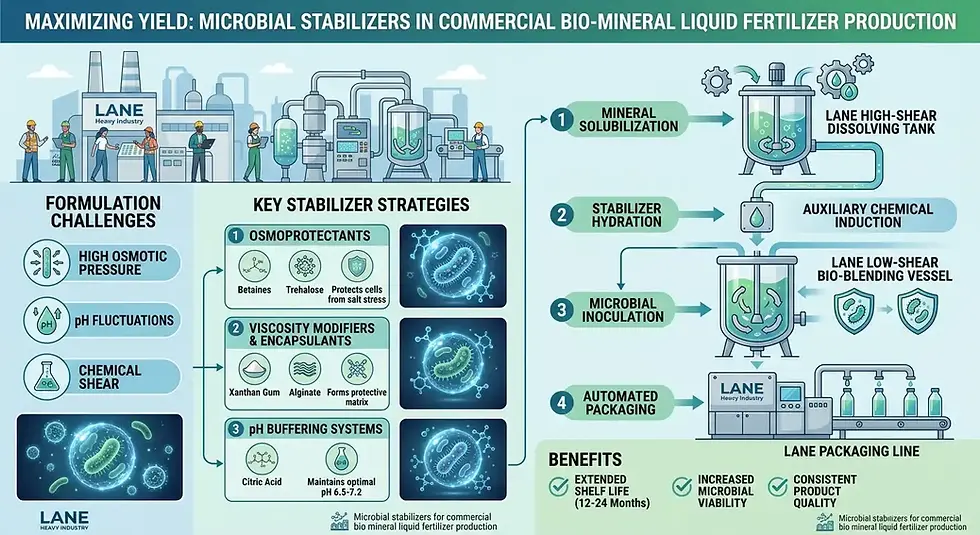
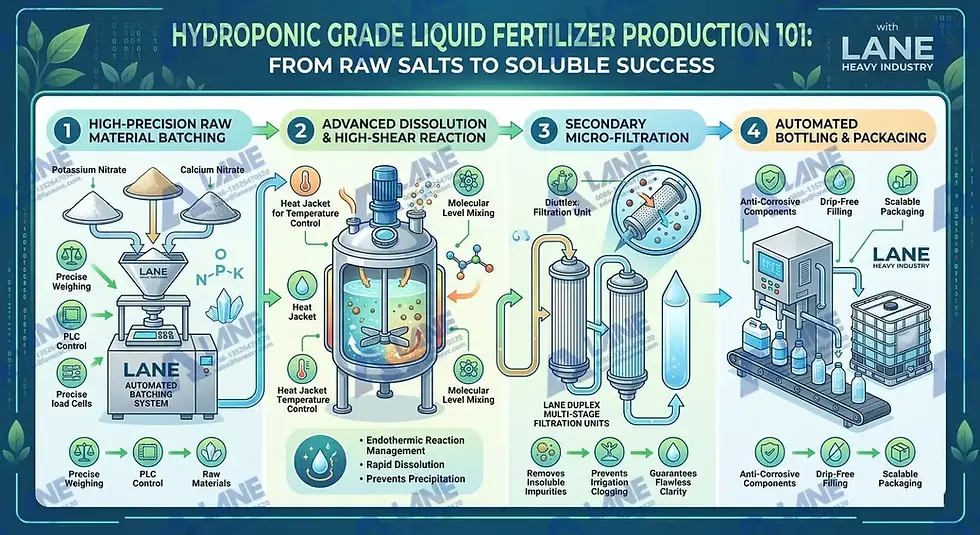
Stainless Steel Reaction Kettles (Reactors): The chelation of boron with sugar alcohols requires specific temperature and pressure conditions. LANE’s high-grade stainless-steel reactors feature advanced heating jackets and precision agitators. These vessels ensure the boron and chelating agents react completely, resulting in a clear, stable liquid without sediment.
High-Shear Emulsifying Mixers: To achieve the molecular-level uniformity required for liquid sugar alcohol chelated boron, LANE’s high-shear mixers are indispensable. They break down any micro-clusters, ensuring that the final product remains a homogeneous solution that won't clog farmers' spray nozzles.
Precision Liquid Filling Lines: High-value liquid fertilizers require professional packaging. LANE Heavy Industry provides automated filling, capping, and labeling systems. These lines are designed to handle the viscosity of sugar alcohol complexes, ensuring accurate dosing and leak-proof sealing for international distribution.
Integrated Control Systems: Modern liquid lines from LANE are equipped with PLC automation. This allows manufacturers to monitor the chelation process in real-time, ensuring every batch meets the strict nutrient density requirements demanded by commercial growers.
Why Manufacturers are Switching to LANE Machinery
For fertilizer companies, the move from dry bulk blends to liquid chelates represents a shift toward high-margin, specialized products. LANE Heavy Industry supports this transition by offering:
Customization: Whether you are producing small batches of specialized "flower boosters" or industrial-scale fruit tree fertilizers, LANE designs lines that fit your production capacity.
Durability: We use corrosion-resistant industrial grade materials to craft the machines when dealing with concentrated boron sources and sugar alcohols. LANE’s machinery is built for longevity in harsh chemical environments.
Expert Support: With years of experience in heavy machinery, LANE provides the technical layout and installation support needed to get a liquid line operational quickly.
Practical application guidelines
Timing: Apply the fertilizer at critical reproductive stages like pre-bloom, bloom, and early fruit set for best effects on pollination and fruit set. For vegetative corrections, use lower rates and repeat applications as needed based on tissue tests.
Rates and monitoring: Always follow product labels expressed in elemental boron; use tissue testing and soil analysis to target doses and avoid toxicity. Overapplication can harm plants and reduce yields.
Compatibility testing: Before tank-mixing with pesticides or other nutrients, perform a small jar test to check for precipitation or pH incompatibilities.
Storage and handling: Store liquid chelates away from extreme temperatures and protect from freezing; ensure containers and lines are clean to avoid contamination or microbial growth.
FAQ
Q1: Why is liquid boron better than powder boron?
A: Liquid forms, specifically those that are sugar alcohol chelated, offer better leaf coverage, faster absorption, and internal mobility that powders cannot match.
Q2: Can Liquid sugar alcohol chelated boron be used in fertigation?
A: Yes. Because it is highly soluble and stable, it is perfect for drip irrigation and fertigation systems without the risk of clogging.
Q3: What is the shelf life of the liquid produced by LANE machinery?
A: When produced using LANE’s precision reactors and high-shear mixers, the resulting chelate is highly stable, typically offering a shelf life of 2–3 years without precipitation.

Email: sales@lanesvc.com
Contact number: +86 13526470520
Whatsapp: +86 13526470520

Comments