


From Concept to Commissioning: Building a Reliable 50 TPH DAP Production System

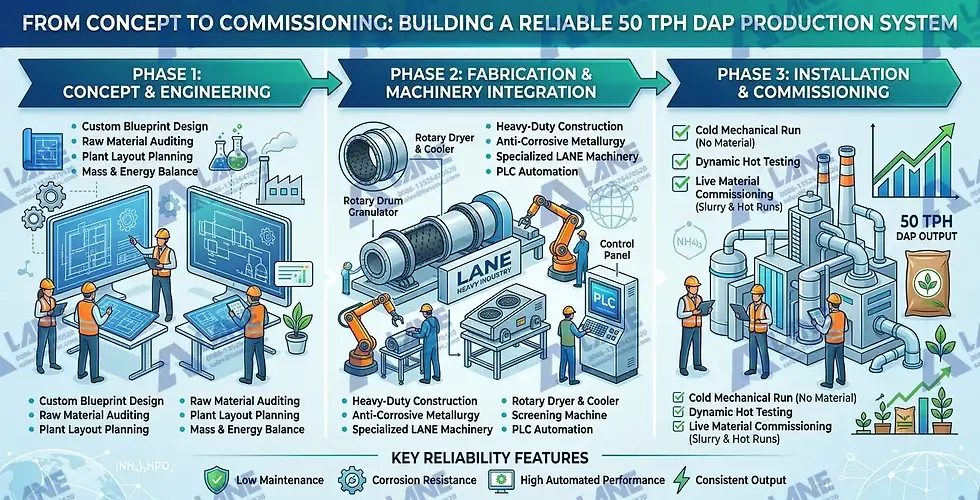
The demand for Diammonium Phosphate (DAP) fertilizer is growing as farmers are seeking nutrients for their crop yields and soil fertility. For fertilizer manufacturer, investing in a 50 TPH DAP production system offers an excellent opportunity to expand production capacity while maintaining operational efficiency and profitability. However, success of any DAP project depends on more than simply purchasing equipment. Building a reliable 50 TPH DAP production system requires careful planning, proper engineering, quality machinery, and professional commissioning support.
Building a reliable 50 TPH DAP production system is a multi-stage journey. It requires precision planning, quality equipment, and seamless integration. For manufacturers moving from concept to commissioning, LANE Heavy Industry’s DAP fertilizer production line provides a turnkey solution engineered for consistent output, operational efficiency, and long-term reliability at the 50 tons-per-hour capacity tier.
Project Planning and Feasibility Analysis
Every successful 50 TPH DAP production system begins with a comprehensive feasibility study. During this stage, manufacturers evaluate market demand, raw material availability, utility requirements, environmental regulations, and investment budgets.
The project team must determine the desired annual production capacity, fertilizer specifications, and future expansion plans. Proper planning helps avoid costly design modifications later and ensures that the production line is optimized for long-term performance. LANE Heavy Industry works closely with customers to develop customized solutions that align with local market conditions and production objectives.
Process Design and Engineering
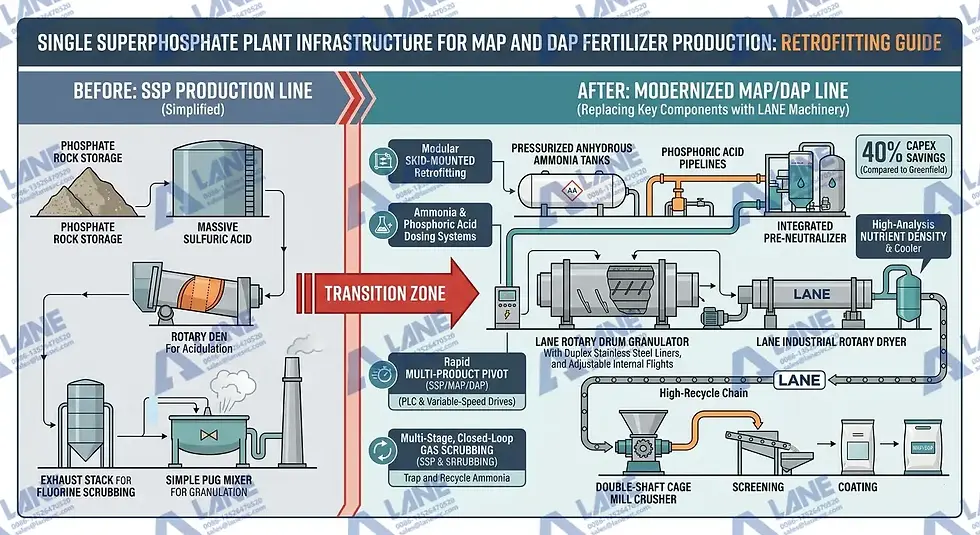
Once project goals have been established, the next step is designing the production process. A modern 50 TPH DAP production system must integrate several critical stages, including ammoniation, granulation, drying, cooling, screening, coating, and packaging.
Engineering teams analyze raw material characteristics and production targets to develop an efficient process flow. Equipment layout, material handling systems, and utility networks are carefully designed to maximize productivity while minimizing energy consumption and operational costs.
At this stage, LANE Heavy Industry utilizes advanced engineering expertise to ensure every component of the production line works together as a complete and efficient system.

Equipment Selection for Reliable Performance
Equipment quality directly affects the reliability and profitability of a 50 TPH DAP production system. Selecting durable machinery with proven performance is essential for maintaining consistent production and minimizing downtime.
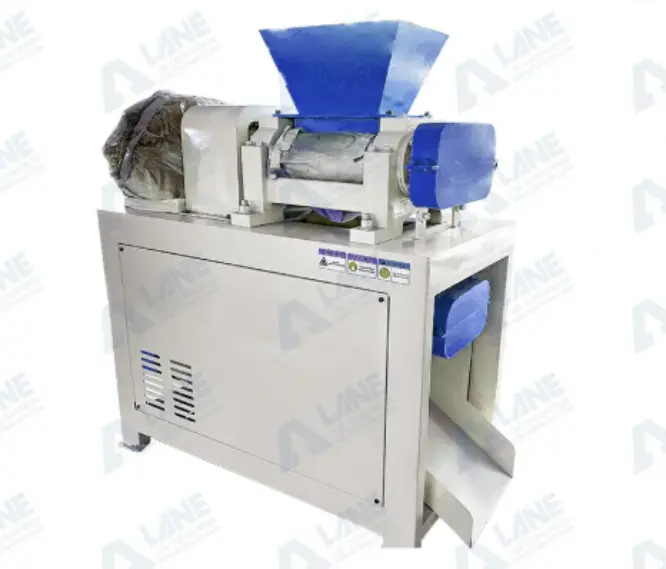
The production line typically includes raw material feeding equipment, ammoniation reactors, granulators, rotary dryers, rotary coolers, screening machines, crushers, coating systems, dust collection units, and automated packaging equipment. Each machine must be properly sized and engineered to match the overall production capacity.
LANE Heavy Industry manufactures high-performance fertilizer equipment designed for continuous operation in demanding industrial environments. The company's equipment emphasizes durability, efficiency, and ease of maintenance, helping manufacturers achieve long-term operational stability.
Construction and Installation
After equipment manufacturing is completed, site construction and installation begin. This phase includes civil works, steel structure installation, equipment positioning, piping, electrical systems, and automation integration.
A reliable 50 TPH DAP production system requires precise installation to ensure smooth material flow and efficient operation. Even minor installation errors can lead to reduced performance, increased maintenance costs, or production bottlenecks.
LANE Heavy Industry provides experienced technical teams that supervise installation activities and ensure all equipment is assembled according to engineering specifications.
Automation and Process Control
Modern fertilizer plants rely heavily on automation to improve efficiency and product consistency. A well-designed 50 TPH DAP production system incorporates advanced control systems that monitor and regulate key process parameters.
Automated controls manage raw material feeding rates, reaction temperatures, granulation conditions, drying performance, and packaging operations. Real-time monitoring allows operators to quickly identify and correct process deviations before they affect product quality.
By implementing intelligent process control systems, manufacturers can reduce labor requirements, improve production efficiency, and maintain consistent fertilizer specifications.
Commissioning and Performance Testing
Commissioning is one of the most important stages in building a successful 50 TPH DAP production system. During this phase, all equipment and control systems are thoroughly tested under actual operating conditions.
Engineers verify mechanical performance, calibrate instruments, optimize process parameters, and evaluate product quality. Any operational issues are identified and corrected before commercial production begins.
LANE Heavy Industry provides comprehensive commissioning services that help customers achieve stable operation as quickly as possible. Through systematic testing and process optimization, the production line can reach its designed capacity while maintaining high-quality DAP granule production.
Operator Training and Technical Support
Even the most advanced 50 TPH DAP production system requires skilled operators to achieve optimal performance. Proper training ensures that plant personnel understand equipment operation, routine maintenance procedures, troubleshooting methods, and safety requirements.
LANE Heavy Industry provides operator training programs that help customers develop the technical expertise necessary for efficient plant management. Ongoing technical support further ensures that production remains stable and profitable throughout the life of the facility.
FAQ
What is the production capacity of a 50 TPH DAP production system?
A 50 TPH DAP production system can produce approximately 1,200 tons of DAP fertilizer per day and more than 400,000 tons annually under continuous operation.
What are the main components of a 50 TPH DAP production system?
The system typically includes feeding equipment, ammoniation reactors, granulators, rotary dryers, coolers, screening machines, coating units, dust collection systems, and packaging equipment.
How long does it take to commission a 50 TPH DAP production system?
Commissioning time varies by project size and site conditions, but most systems require several weeks of testing, optimization, and operator training before full commercial operation.
Email: sales@lanesvc.com
Contact number: +86 13526470520
Whatsapp: +86 13526470520

Comments