


Building an Efficient Organic Liquid Fertilizer Production System for Tomato Farms: A Step-by-Step Guide


Tomato is one of the most commercial and profitable vegetable in the world. It requires intense nutrient management to get premium harvest. An Organic liquid fertilizer production system for tomato farms gives growers a practical way to turn organic raw materials into a consistent, plant-ready nutrient solution. Liquid organic fertilizers offer superior bioavailability, allowing tomato plants to absorb essential nutrients. This is especially true for drip irrigation or foliar spraying systems.
To build a professional grade system, partnering with LANE Heavy Industry ensures that your liquid fertilizer production line is durable, efficient, and capable of producing a consistent, high-quality product. machinery from LANE Heavy Industry helps make the process efficient, scalable, and reliable.
Step 1: Raw Material Preparation and Crushing
The foundation of any organic liquid fertilizer is the raw material. For tomato farms, this often includes crop residues, fruit peels, seaweed, or composted animal manure.
The Process: Raw materials must be broken down into small, uniform particles to increase the surface area for microbial decomposition and extraction.
LANE Machinery: Utilize a LANE semi-wet Crusher. These machines are designed to handle semi-wet materials and tough organic fibers, ensuring the input is perfectly primed for the next stage.
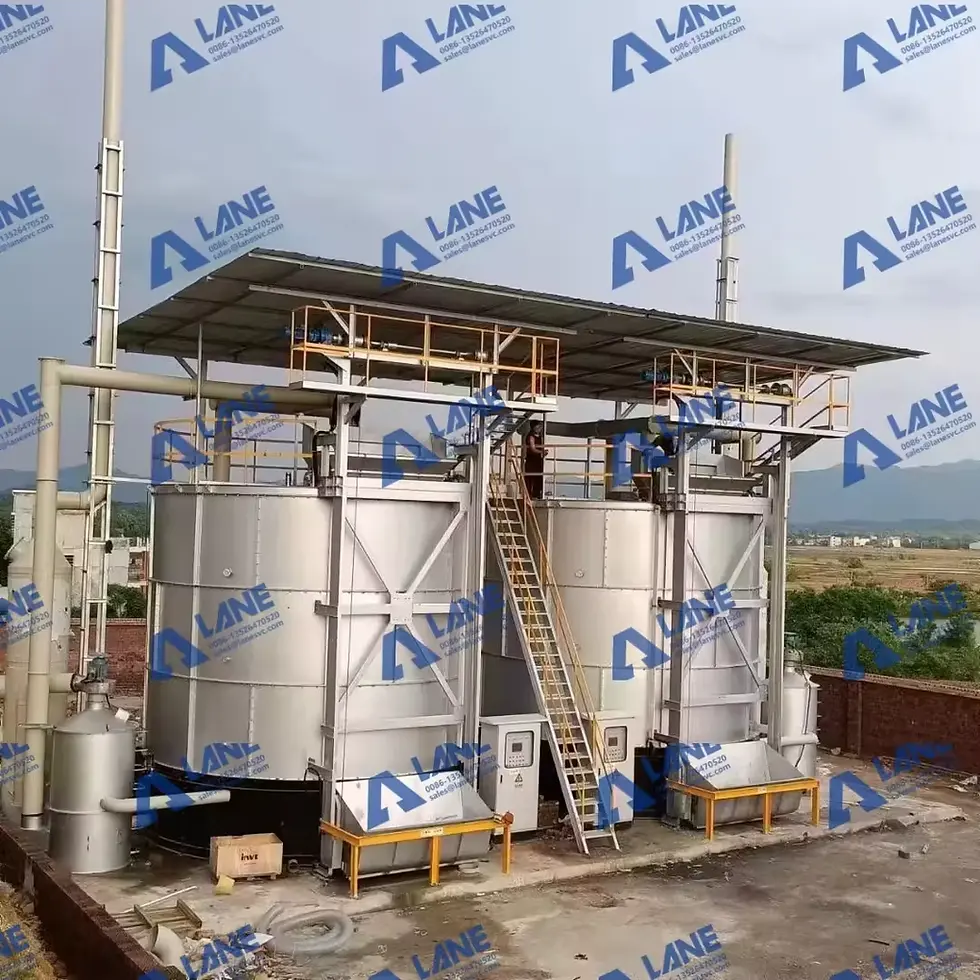
Step 2: Fermentation and Decomposition
Organic matter must be stabilized through fermentation to convert complex molecules into plant-available nutrients.
The Process: Microbes break down the organic solids in a controlled environment. This stage is critical for eliminating pathogens and odors while concentrating nutrients like calcium, which prevents blossom end rot in tomatoes.
LANE Machinery: Use a LANE Specialized Fermentation Tank. These tanks feature automated temperature and humidity controls, allowing for both aerobic and anaerobic processes that maximize nutrient conversion.
Step 3: Mixing and Reaction
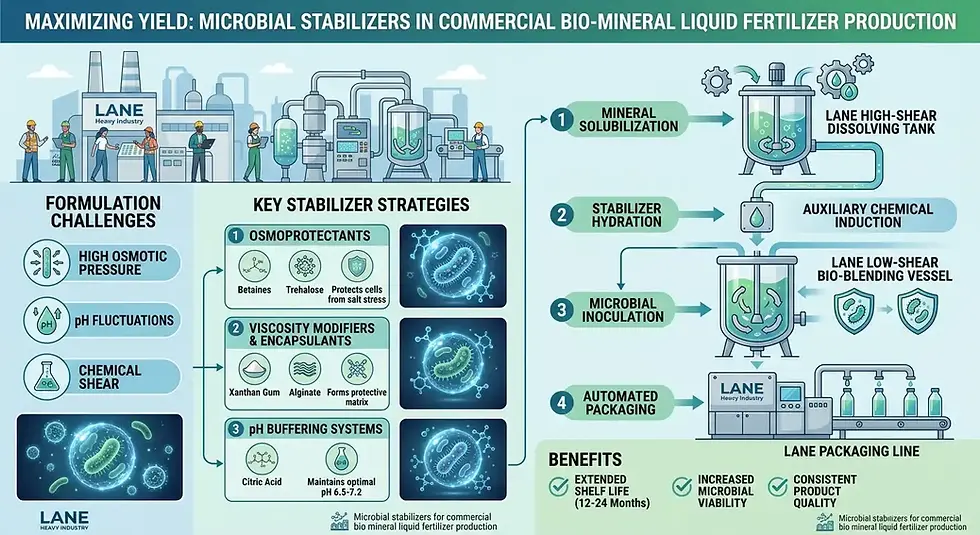
Once the organic base is fermented, it needs to be blended with water and potentially enriched with micronutrients (magnesium, iron, etc.) to meet the specific needs of a tomato crop.
The Process: Ingredients must be homogenized to ensure every drop of fertilizer has the same nutrient density.
LANE Machinery: The LANE Chemical Reactor (integrated with mixing functions) are built to resist corrosion from organic acids, ensuring long-term reliability.
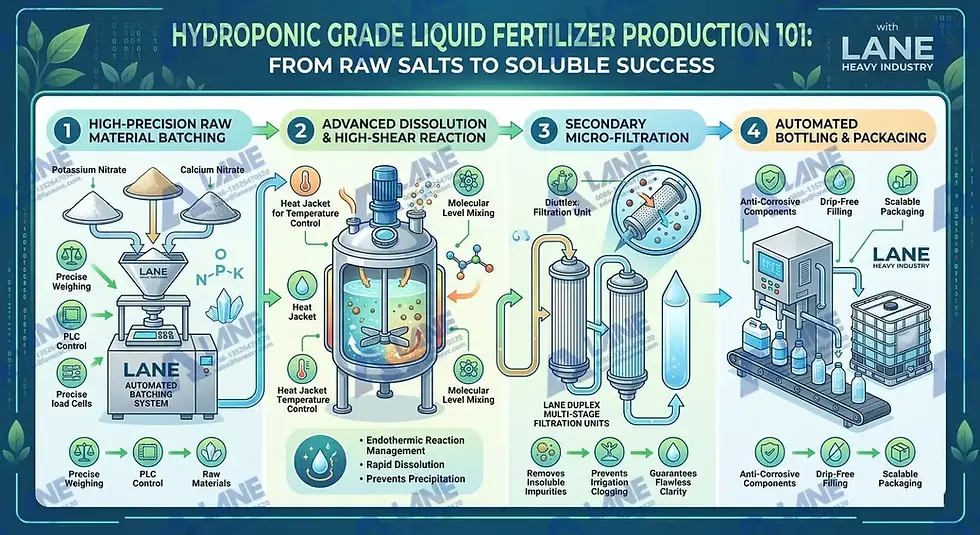
Step 4: Filtration and Purification

For tomato farms using drip irrigation, the liquid fertilizer must be completely free of solids to prevent clogging the lines.
The Process: The raw liquid is passed through various stages of filtration to remove suspended particles.
LANE Machinery: A LANE Multi-Stage Filtration System ensures the final product is smooth and sediment-free, making it safe for precision irrigation systems.
Step 5: Automated Filling and Packaging
The final step is preparing the fertilizer for storage or sale.
The Process: Accurate dosing and airtight sealing are required to maintain the shelf life and potency of the organic liquid.
LANE Machinery: LANE Automatic Filling and Capping Machines streamline the packaging process. From small bottles for boutique gardens to large barrels for commercial tomato fields, these machines offer high-speed, precision performance.
Why Choose LANE Heavy Industry?
Building a production line is a significant investment. LANE Heavy Industry offers turnkey solutions—from engineering design and 3D layout to equipment manufacturing and overseas installation. Their machinery is characterized by high automation, low power consumption, and a compact footprint, making it ideal for farms looking to scale their organic production.
FAQs
1. Why is liquid fertilizer better than granules for tomatoes?
Liquid fertilizer is absorbed much faster by the roots and leaves. It is also easier to apply via existing irrigation systems, ensuring a more uniform distribution of nutrients compared to solid granules.
2. Can I use tomato waste to make the fertilizer?
Yes. Decayed tomatoes, leaves, and stems are excellent raw materials. Using a LANE Crusher to process these residues creates a closed-loop system that reduces waste on your farm.
3. How long does the fermentation process take?
In a controlled LANE Fermentation Tank, the process is significantly faster than traditional outdoor composting, typically taking anywhere from 7 to 14 days depending on the raw materials used.
4. What is the dilution ratio for the final product?
Common organic liquid fertilizers are concentrated. A standard ratio is 1:10 or 1:15 (fertilizer to water), but this should be tested based on the specific nutrient profile of your batch.

Email: sales@lanesvc.com
Contact number: +86 13526470520
Whatsapp: +86 13526470520

Comments