


A Grower's Guide: The Essential SOP vs MOP Fertilizer Comparison
- Efat Elahi
- Jan 19
- 4 min read

Selecting the right potassium fertilizer is a critical decision for every high-quality cash crops nutrient management plant. Potassium is essential macronutrient for plant growth, regulating water pressure, activating enzymes, and transporting sugars. The two most common potassium fertilizer are Sulfate of Potash (SOP, K₂SO₄) and Muriate of Potash (MOP, KCl). They both supply potassium to the plant while their accompanying anions (sulfate vs. chloride) drive significant differences in performance, making the SOP vs MOP fertilizer comparison critical for growers aiming to optimize crop yield and quality. This essential SOP vs MOP fertilizer comparison article will guide you through the complexity of the both fertilizers.

Table of Contents
Potassium 101: Two Sources, Different Profiles
Side-by-Side: The Core SOP vs MOP Fertilizer Comparison
Crop Response & Soil Impact: The Real-World Difference
The Machinery Behind Consistent, Quality SOP Production
Making Your Choice: Key Questions to Ask
Frequently Asked Questions (FAQ)
Final Recommendation
1. The Core Difference: It's More Than Just Potassium
Both SOP and MOP supply the essential potassium to the crops. The real SOP vs MOP fertilizer comparison lies in the companion ion attached to it.
MOP (Muriate of Potash / KCl): This is the most widely used potassium fertilizer. It contains about 60-62% K₂O and is approximately 47% chloride (Cl). It supplies most amount of potassium in price per ton.
SOP (Sulfate of Potash / K₂SO₄): A premium SOP fertilizer contains around 50-52% K₂O and a significant 17-18% sulfur (S) in the sulfate form. It is mainly prized for its zero chloride.
This fundamental chloride vs. sulfate difference drives all subsequent effects on your farm.
2. Side-by-Side: The Core SOP vs MOP Fertilizer Comparison
Feature | SOP (K₂SO₄) | MOP (KCl) |
Primary Nutrient (K₂O) | ~50-52% | ~60-62% |
Secondary Component | 17-18% Sulfur (S) | ~47% Chloride (Cl) |
Salt Index | Lower (Less salinity risk) | Higher (Can increase salinity) |
Best For | Chloride-sensitive crops, quality focus, saline soils. | Chloride-tolerant crops, cost-sensitive programs. |
Cost Profile | Higher initial cost per ton. | Lower initial cost per ton. |

3. Crop Response & Soil Impact: The Real-World Difference
This is where theory meets the fields in our SOP vs MOP fertilizer comparison.
For Chloride-Sensitive Crops: Cash crops like tobacco, potatoes, berries, grapes, and nuts can suffer from chloride toxicity when they are fed MOP. The symptom of chloride poisoning includes leaf burn, reduced tuber quality (specific gravity in potatoes), and impaired flavor.
The Sulfur Advantage: Sulfur is a key secondary nutrient. SOP supplies it in the sulfate form. Sulfur is essential for protein synthesis, chlorophyll formation, and nitrogen use efficiency. This directly enhances crop quality, oil content, and marketability.
Soil Health Long-Term: Repeated use of MOP will lead to increase soil salinity and chloride buildup. It is concern in arid regions or poorly drained soils. SOP supplies potassium without the high chloride content.
4. The Machinery Behind Consistent, Quality SOP Production
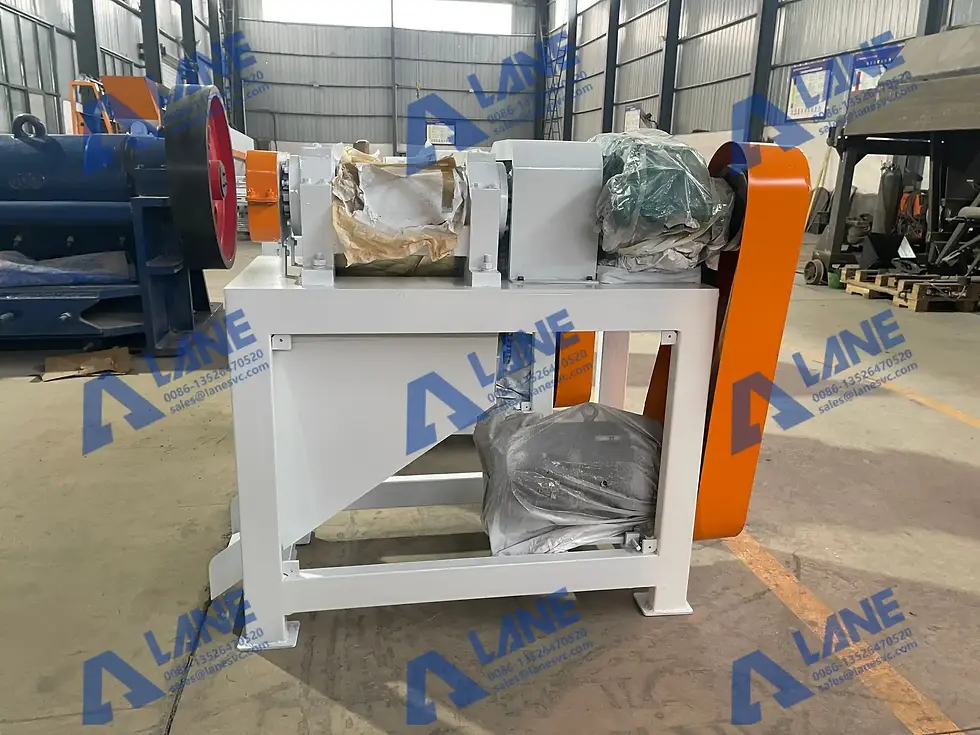
The efficiency of SOP application depends on its physical form. Quality granules ensure even spreading, resist dust, and prevent segregation in blends. Here’s the essential machinery list from LANE Heavy Industry that transforms raw SOP into a premium, reliable fertilizer product:
Feeding & Mixing System: Precisely meters and blends raw SOP powder with any required binders.
Double Roller Press Granulator: The heart of the line. This machine uses extreme mechanical pressure to compact powder into a solid, dense granulator. This process is called dry granulation. It’s ideal for water soluble material li ideal for water-soluble materials like SOP.
Rotary Screening Machine: This machine separates the perfectly sized granules from fines (returned for re-processing) and oversized chunks (sent for crushing).
Rotary Drum Polisher: Rounds and hardens the granules, creating a durable, dust-free final product with excellent handling properties.
Rotary Drum Dryer & Cooler: Removes residual moisture and solidifies the granules, ensuring storage stability.
Automatic Packaging Machine & Coating System: Weighs and bags the final product. An optional coating drum can apply anti-caking agents.
5. Making Your Choice: Key Questions to Ask
Conclude your SOP vs MOP fertilizer comparison by asking:
What is my crop? (Check chloride sensitivity.)
What does my soil test say? (Review chloride, sulfur, and salinity levels.)
What is my water quality? (High chloride irrigation water tips the scale toward SOP.)
Am I growing for a quality premium? If yes, SOP often pays dividends.
6. Frequently Asked Questions (FAQ)
Q: Can I blend SOP and MOP?
A: Absolutely. Blending is a smart strategy to reduce chloride load and cost while adding valuable sulfur. It’s a common practical compromise.
Q: Is SOP organic?
A: Certain naturally mined SOP versions are OMRI-listed and approved for organic use. Always confirm with your certifier.
Q: In this SOP vs MOP fertilizer comparison, which gives a better yield?
A: For tolerant crops (e.g., corn, cotton) in good soils, yield may be similar. For sensitive crops, SOP protects yield potential that MOP can compromise.
Q: Why does granule quality from the production line matter?
A: Hard, uniform granules from a system like LANE's ensure accurate application rates, no dust loss, and consistent nutrient distribution across your field—maximizing your investment.
Q: Does LANE provide a complete SOP production line?
A: Yes, LANE Heavy Industry engineers and supplies complete, turnkey SOP fertilizer production lines, integrating all the machinery from feeding to packaging for optimal efficiency.
7. Final Recommendation
There is no single "best" fertilizer. Use this SOP vs MOP fertilizer comparison as your guide:
Choose MOP for: Broadacre, chloride-tolerant crops where initial cost is the primary driver and soil salinity is low.
Invest in SOP for: High-value, chloride-sensitive crops, quality-driven programs, or soils where managing salinity and chloride is a concern. The consistent quality produced by modern granulation lines makes it a reliable foundation for premium crop production.

Email: sales@lanesvc.com
Contact number: +86 13526470520
Whatsapp: +86 13526470520


Comments