


Why SOP Fertilizer Matters in Today’s Agriculture

Why SOP Fertilizer Matters in Today’s Agriculture
SOP fertilizer analysis has become an essential topic for farmers, agronomists, and fertilizer producers alike. As agriculture moves toward precision and sustainability, sulfate of potash (K₂SO₄) stands out for its ability to provide potassium and sulfur—two nutrients vital for crop growth—without the drawbacks of chloride-based fertilizers.
This article explores not only the benefits and performance of SOP fertilizer but also the key equipment and technologies behind its industrial production. With years of experience in fertilizer engineering, LANE has become a trusted name for delivering complete SOP fertilizer production lines that combine automation, efficiency, and environmental safety.

The Value of SOP Fertilizer in Modern Crop Management
SOP fertilizer is known for being chloride-free, making it ideal for salt-sensitive crops like grapes, tobacco, potatoes, and citrus. It enhances:
Fruit sweetness and coloration
Resistance to disease and stress
Protein synthesis and oil content
Soil balance without acidification
Through a detailed SOP fertilizer analysis, experts have shown that the combination of potassium and sulfur results in stronger plants, higher yield quality, and longer storage life for harvested produce.
Industrial Production of SOP Fertilizer: Key Equipment and Process
Modern SOP fertilizer production line is a continuous process designed for precision, safety, and efficiency. Each section of the production line is carefully engineered and controlled.
Raw Material Feeding System
Potassium chloride (KCl) from the storage silo is fed into the process using screw conveyors, bucket elevators, and belt conveyors. Concentrated sulfuric acid (98%) is transferred through acid-resistant pipelines and a sulfuric acid pump into a sulfuric acid storage tank for accurate dosing.
Reaction Furnace System
Inside the reaction furnace, KCl and H₂SO₄ react under high temperature and continuous mixing. The furnace is lined with refractory bricks and managed by a PLC automatic control cabinet to maintain the exact temperature profile. Sensors, thermocouples, and pressure monitors ensure stability and safety throughout the process.
Gas Absorption and Byproduct Recovery
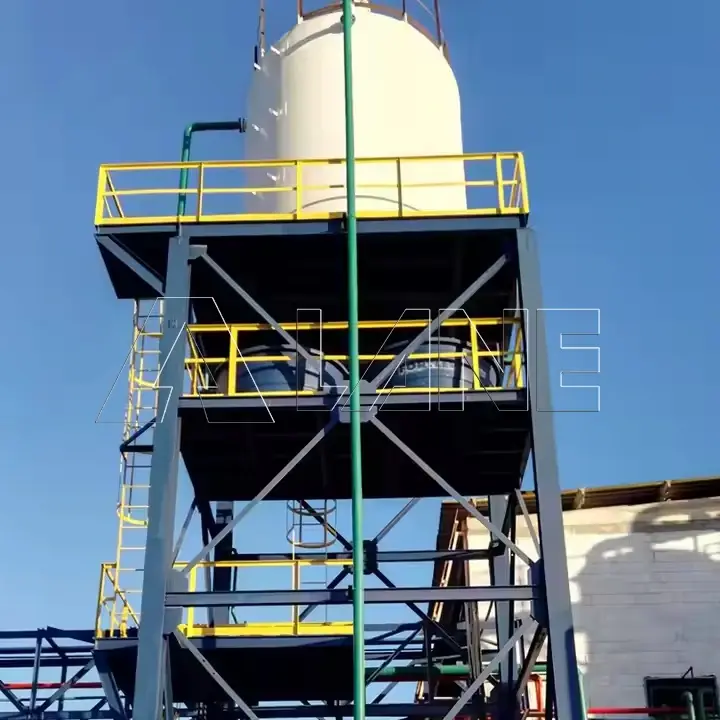
The hydrogen chloride gas generated in the furnace is directed into a gas cooling system and then into acid absorption towers equipped with sulfuric acid scrubbers and packed columns. Here, the gas is converted into 30–33% hydrochloric acid, which is collected in an acid storage tank for sale or reuse.
Product Cooling, Crushing, and Screening
The hot crude SOP product is discharged onto a vibrating fluid bed cooler or rotary cooler, reducing its temperature before entering a hammer mill crusher. After crushing, the material is refined through vibrating screens that separate fine and coarse particles. Qualified SOP crystals are stored in finished product silos, while oversized granules are recycled.
Environmental and Utility Systems
Supporting systems include circulating cooling water units, air compressors, and neutralization tanks that treat acidic wastewater. Dust collectors and chimney scrubbers ensure compliance with emission standards.
LANE integrates all of these elements into a compact, modular SOP fertilizer line, making operation safer, cleaner, and more efficient. Each production plant is customized based on local conditions—such as fuel availability, raw material purity, and climate.
Advantages of LANE’s SOP Fertilizer Systems
LANE’s production lines stand out for their:
High automation level with full PLC control.
Energy-saving design, using heat exchangers and recirculating water systems.
Corrosion-resistant materials like PTFE-lined steel and FRP towers.
Turnkey service from design to installation and operator training.
With years of global project experience, LANE ensures every SOP fertilizer production line is not only reliable but also environmentally responsible, helping fertilizer manufacturers meet strict industrial standards while maintaining profitability.
Conclusion: From Equipment to Excellence
A thorough SOP fertilizer analysis shows that potassium sulfate is a critical ingredient in sustainable, high-value agriculture. Yet, behind every ton of high-quality SOP fertilizer lies advanced machinery, automation, and technical precision.
By combining innovative design, durable equipment, and efficient control, LANE provides the complete solution for fertilizer producers worldwide—turning raw minerals into agricultural value and supporting the future of green farming.
Of course, we also offer other types of products for your different needs, you can click to view.
For more information, please contact us by sending an inquiry today! We can help you!


Comments