


Potassium Sulfate Fertilizer Production Line for Tea: Manufacturing Process & Field Application in Tea Gardens


Tea is a one of the worlds most consumed beverages. Tea crop demands careful nutrient management to preserve its unique flavor, aroma, and commercial value. This is where a dedicated potassium sulfate fertilizer production line for tea becomes essential. Potassium and sulfur are two most important nutrient for tea plants. Potassium strengthens the plant’s resistance to drought, cold, and pests and sulfur enhances the synthesis of aromatic compounds and amino acids. Amino acid directly determines the taste and quality of tea.
LANE Heavy Industry Machinery, a trusted leader in fertilizer equipment manufacturing, has designed Potassium sulfate fertilizer production line for tea that integrates advanced manufacturing technology to create SOP fertilizer that can be blended with other nutrients for tea garden application.
The Manufacturing Process of SOP Fertilizer for Tea
Raw Material Preparation
The production of SOP fertilizer begins long before the production phase. Manufacturers must source high-quality raw materials. The primary input materials are potassium chloride (KCl, minimum 60% K₂O) and 98% sulfuric acid (H₂SO₄). For every ton of SOP, 850 kg of KCl and 570 kg of sulfuric acid are required along with small amount of limestone powder.
The first mechanical step in any potassium sulfate fertilizer production line for tea is crushing and grinding the potassium chloride to a fine powder. It is essential for ensuring complete chemical reaction with sulfuric acid.
The Mannheim Furnace Reaction
This step determines the quality of the potassium sulfate. LANE use Mannheim reaction that converts potassium chloride and sulfuric acid into potassium sulfate. The reaction follows this equation:
2KCl + H₂SO₄ → K₂SO₄ + 2HCl
LANE utilizes state-of-the-art Mannheim furnace reactors that carefully control temperature and pressure conditions. The precise control over the temperature ensures high-purity potassium sulfate with minimal contaminants.
Our synthesis process can achieve chloride levels as low as 0.5-1.5%. The by-product hydrochloric acid gas can be converted into commercial grade hydrochloric acid for industrial use.
Separation and Purification
After the chemical reaction, LANE LANE's advanced filtration and separation equipment efficiently removes the hydrochloric gas while the SOP cake is cooled and ground using specialized coolers and crushers. This step ensures the final potassium sulfate fertilizer production line for tea output contains minimal contaminants and meets agricultural purity standards.
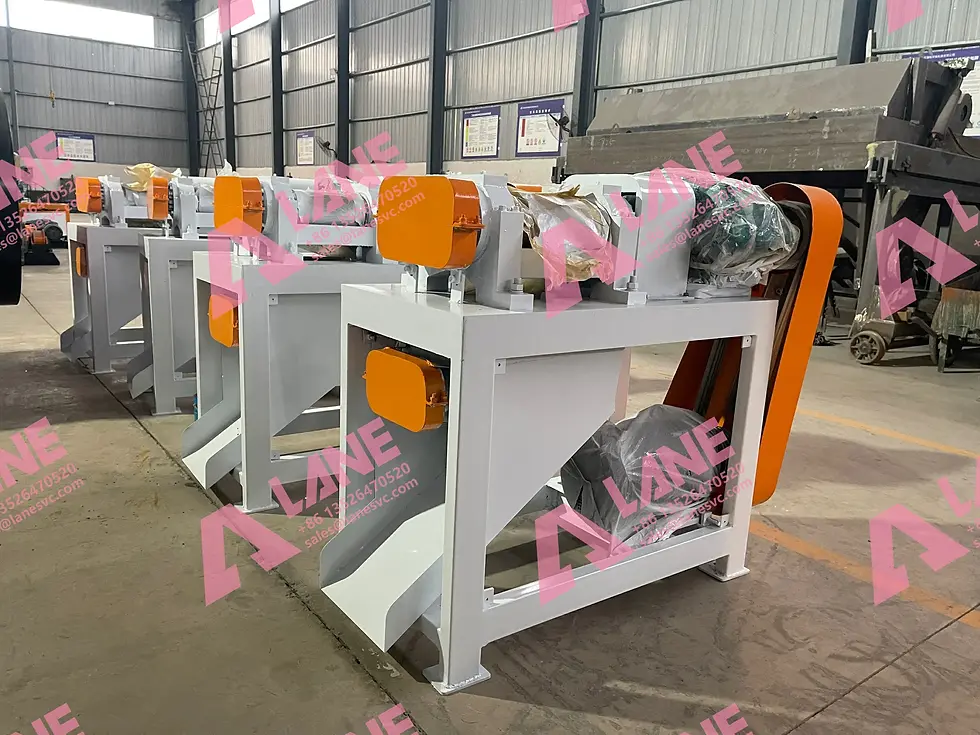
Granulation: Creating Tea-Ready Granules
granulation ensures the field performance of the SOP fertilizer. LANE’s SOP fertilizer production line features double roller granulators or rotary drum granulators to produce uniform sized granules.
Uniform particle size offers multiple benefits for tea gardens:
Even spreading across undulating terrain
Consistent nutrient release throughout the growing season
Reduced dust during application
Improved storage without caking or degradation
After granulation, the product is screened with Rotary screener to separate on-size granules from fines and oversized particles. These are crushed and recycled back into the granulator, creating a closed-loop process that maximizes yield and minimizes waste.
Drying and Dust Recovery
The rotary drum dryer efficiently removes moisture from the granules, maintaining optimal moisture content for long-term storage stability. LANE's production lines also incorporate highly effective cyclone dust collectors that capture fine particles released during granulation and drying. This collected dust is reintroduced into the production cycle, reducing material waste and improving overall resource utilization.
Part 2: Field Application in Tea Gardens
Why Tea Demands SOP Fertilizer
Tea plants are classified as "chlorine-avoiding" crops, meaning they cannot tolerate high chloride levels. Chloride accumulation leads to leaf burn, reduced photosynthesis, and bitter flavor compounds. Research confirms that SOP significantly outperforms MOP for tea, field trials demonstrated higher yield increases with SOP (17.5%) compared to MOP (12.6%).
SOP's sulfur content (17-18%) is equally important. Sulfur is essential for the amino acids and volatile compounds that create tea's distinctive aroma and taste. Many modern soils are sulfur-deficient, making SOP's sulfur contribution particularly valuable.
Application Methods
Base Fertilizer Application: SOP is primarily used as a base fertilizer in tea gardens. It should be applied through furrow application or hole application, with soil coverage for best results. In sloped tea gardens, the "Kokra-eyebrow method" is recommended—applying fertilizers in semi-circular furrows above the plants on the slope when adequate soil moisture is present and fields are free from weeds.
Placement Considerations: The fertilizing area should be separated from seeds or seedlings by 5-10 centimeters to prevent root damage. For mature tea plants, apply along the drip circle of plants or in shallow furrows where feeder roots are concentrated.
Foliar Application: SOP can also be used for foliar feeding at concentrations of 2-3% (20-30 grams per liter of water). This is particularly useful during critical growth stages or when rapid nutrient response is needed.
Soil Considerations
SOP is suitable for various soil types but requires some management considerations:
In acidic soils (common in tea-growing regions), long-term application of SOP should be combined with lime application or calcium-magnesium phosphate fertilizers to prevent excessive acidification
In sandy soils with high leaching potential, SOP should be applied in smaller, more frequent doses
For soils with pH below 4.5, higher potassium rates may be necessary to compensate for reduced availability

Conclusion
LANE Heavy Industry’s Potassium sulfate fertilizer production line for tea combines advanced manufacturing technology with practical tea garden application. It offers a chloride-free, sulfur-rich nutrition that tea plants need to produce tender leaves, complex aromas, and rich flavors. It brings efficient, cost-saving, and environment-friendly production benefits to your tea garden. You also have a secondary income generator by selling SOP fertilizer to other farms and gardens.
Frequently Asked Questions
Q1: Why is a specialized potassium sulfate fertilizer production line for tea necessary?
A1: Tea plants are highly sensitive to chloride and require fertilizer with less than 1.5% chloride content. A dedicated production line ensures precise control over the Mannheim reaction to minimize chloride residues while producing uniform granules sized for tea garden application equipment.
Q2: What are the main raw materials required for SOP production?
A2: The primary raw materials are potassium chloride (KCl, minimum 60% K₂O) and 98% sulfuric acid (H₂SO₄). Production consumes approximately 850 kg of KCl and 570 kg of sulfuric acid per ton of SOP, plus small amounts of limestone powder and utilities.
Q3: How does SOP fertilizer benefit tea plants specifically?
A3: SOP provides chloride-free potassium (50-52% K₂O) and sulfur (17-18%) essential for tea quality. It increases free amino acids responsible for flavor, enhances disease resistance, improves photosynthesis, and protects against chloride toxicity that causes leaf burn.
Q4: What is the recommended application method for SOP in tea gardens?
A4: SOP should be applied as basal fertilizer through furrow or hole application with soil coverage. For sloped gardens, use the Kokra-eyebrow method with semi-circular furrows above plants. Maintain 5-10cm separation from plant stems to prevent root damage.
Q5: When should SOP be applied to tea plants?
A5: For mature tea, apply 25-40 kg/mu before spring growth, 12-20 kg before summer tea, and 12-20 kg before autumn tea. Young tea in first year requires higher rates (up to 270 kg K₂O/ha) applied in 5-6 splits annually.
Q6: How does LANE's production line ensure environmentally responsible manufacturing?
A6: LANE's closed-loop systems capture dust through cyclone collectors and reintroduce it into the production cycle. Waste heat recovery technology reuses energy from drying processes, and the hydrochloric acid by-product is captured for industrial use rather than released.
Q7: What is the typical production capacity of LANE's SOP production line?
A7: LANE offers scalable solutions from modular units to large industrial plants. The Mannheim furnace system can produce various capacities, and consumption rates average 65 KWh of electricity and 70 m³ of natural gas per ton of SOP produced.
Q8: Can SOP fertilizer be used for other crops besides tea?
A8: Yes, SOP is ideal for all chloride-sensitive crops including tobacco, grapes, potatoes, citrus, various vegetables, and fruit trees. It's also beneficial for sulfur-loving crops like onions, garlic, and legumes.

Email: sales@lanesvc.com
Contact number: +86 13526470520
Whatsapp: +86 13526470520


Comments