


Key Equipment and Production Line for Soil Amendment from Agricultural Waste: LANE Heavy Industry's Complete Solution


Table of Contents
Introduction: The Equipment Behind Soil Amendment from Agricultural Waste
Pre-Treatment Equipment
Fermentation and Composting Machinery
Crushing and Mixing Systems
Granulation Technologies
Drying, Cooling, and Screening Equipment
Automated Packaging Systems
Environmental Protection Features
Frequently Asked Questions (FAQ)
1. Introduction: The Equipment Behind Soil Amendment from Agricultural Waste
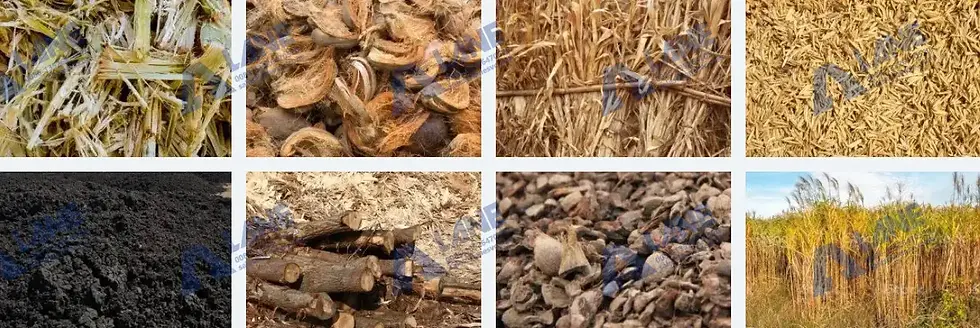
Soil amendment from agricultural waste is a sustainable solution that converts organic waste and agricultural byproducts such as rice husk, coffee grounds, eggshells, crop straw, and poultry manure into organic soil amendments. It is a critical product for soil heath restoration. This process reduces methane emissions from landfills while enriching soil with organic matter and improve soil fertility and structure.
LANE Heavy Industry, a leading heavy machinery manufacturer, has developed a specialized organic fertilizer production line for soil amendment from agricultural waste, integrates advanced equipment and technologies to realize efficient, large-scale production of soil amendment from agricultural waste.
2. Pre-Treatment Equipment
The production of soil amendment from agricultural waste begins with raw material preparation for optimal processing. LANE’s pre-treatment equipment handles diverse raw materials including crop straw, animal manure, rice chaff, vegetable waste, and fruit peels.
Material Handling Solutions
Solid-liquid separators: Remove excess moisture from wet materials like fresh manure
Crushers and shredders: Reduce particle size for uniform decomposition
Screening equipment: Remove contaminants and oversized materials.
Proper pre-treatment ensures that subsequent processing stages operate efficiently, producing consistent soil amendment from agricultural waste with predictable properties.
3. Fermentation and Composting Machinery
The biological transformation of organic waste into stable soil amendment from agricultural waste requires controlled decomposition. LANE offers multiple fermentation technologies suited to different scales and raw materials.
Crawler Compost Turner: This machine is ideal for large-scale operations. It can process organic raw materials effectively. Regular turning ensures uniform aeration, temperature control, and accelerated decomposition.
Aerobic Fermentation Tanks: For operations requiring controlled environments, LANE's vertical and horizontal tanks maintain optimal humidity and temperature for 7-14 day fermentation cycles. The addition of microbial inoculants ensures rapid decomposition and pathogen elimination.
Proper fermentation produces soil amendment from agricultural waste with enriched nutrient profiles and stable organic matter, ready for further processing.

4. Crushing and Mixing Systems
After fermentation, the humus requires size reduction to ensure uniformity. Then it is sent to mixing stage for formulation.
LANE Crushing Technology: LANE manufactures custom crushers depending on the raw materials. Our specialized fertilizer crusher achieves fine particle sizes essential for efficient granulation. Uniform particle distribution ensures that every granule contains balanced nutrients.
Horizontal Mixers: LANE mixing machines blend crushed materials with additives to create customized formulations. Whether producing standard organic amendments or specialized phosphorus-rich products, precise mixing ensures nutrient uniformity throughout the soil amendment from agricultural waste.
5. Granulation Technologies
In the granulation stage, we transform formulated humus into uniform, easy-to-handle particles. Granulated soil amendment from agricultural waste offers advantages: ease of handling, controlled nutrient release, and compatibility with mechanized application.
Rotary Drum Granulators: These high-capacity machines produce spherical granules through tumbling action. It’s ideal for large-scale production of organic fertilizer. These high-capacity machines produce spherical granules through tumbling action. The gentle rolling action creates strong, durable particles.
Disc Granulators: For smaller operations or specialized products, disk granulator offers precise control over granule size and shape. Operators can adjust disk angle and rotation speed to achieve desired specifications.
6. Drying, Cooling, and Screening Equipment
After granulation, the soil amendment from agricultural waste requires further processing to ensure stability and quality.
Rotary Dryers: LANE’s drying systems remove excess moisture from granules and prevent degradation during storage and maintain structural integrity. Proper drying ensures that the final product remains free-flowing and resistant to caking.
Rotary Coolers: Cooling equipment reduces granule temperature after drying. It prepares the soil amendment from agricultural waste for screening and packaging. Controlled cooling prevents moisture reabsorption and maintains product quality.
Rotary Screening Machines: Screening separates qualified granules from oversized and undersized materials. Unqualified particles are returned to the production line. This ensures zero waste and consistent product quality.
7. Automated Packaging Systems
The final stage of producing soil amendment from agricultural waste involves efficient packaging for distribution and sale.
LANE Automatic Bagging Machines
These systems accurately weigh and fill bags with finished product, ensuring consistent package weights and professional presentation. Automated systems handle various bag sizes and materials, accommodating different market requirements from retail to bulk agricultural sales.
8. Environmental Protection Features
LANE integrates environmental stewardship into every soil amendment from agricultural waste production line.
Emission Control
Pulse dust collectors: Capture airborne particles from crushing and screening
Spray towers: Treat exhaust air to remove odors and pollutants
Odor control systems: Ensure compliant operation in populated areas
All equipment carries ISO and CE certification, with warranty periods extending to 5 years after shipment, guaranteeing quality and reliability.
9. Frequently Asked Questions (FAQ)
Q1: What raw materials can LANE equipment process for soil amendment from agricultural waste?
LANE's production line processes animal manure, crop straw, rice chaff, vegetable waste, fruit peels, wine grains, sawdust, sugarcane bagasse, and various agricultural byproducts.
Q2: How long does it take to set up a complete production line?
For complete soil amendment from agricultural waste production lines, LANE's production time is no more than 30 days, with single machines available in approximately 7 days.
Q3: Do you provide operator training?
Yes. LANE engineers provide on-site instruction for machine installation, workshop configuration, and production line operation, including field tests and comprehensive training.
Q4: What is the production capacity range?
LANE offers production lines with capacities from 1-40 tons per hour, customizable to meet specific production requirements.
Q5: What quality certifications do LANE machines have?
All LANE machines have passed ISO and CE certification, with warranty periods extending to 5 years after shipment date.
Q6: Is the production process environmentally compliant?
Yes. LANE integrates pulse dust collectors, spray towers, and odor control systems to ensure environmental compliance.
Q7: Can I produce specialized formulations?
Yes. LANE offers specialized lines for phosphorus-rich organic fertilizers and other custom formulations.
Q9: How do I select the right equipment?
Contact LANE with information about your raw materials, desired capacity, and target granule size for personalized equipment recommendations.

Email: sales@lanesvc.com
Contact number: +86 13526470520
Whatsapp: +86 13526470520


Comments