


Industrial SOP Fertilizer from Brine: Sustainable Production and Quality Control


In the manufacturing industry, environmental sustainability and product quality are core competitive advantage. As agriculture industry is shifting toward premium crop production due to environmental protection, chloride-free potassium fertilizers are experiencing rapid demand growth. Among them, industrial SOP fertilizer from brine has emerged as a sustainable, high-value alternative to traditional potassium fertilizers. Unlike the energy-intensive Mannheim process that produces SOP with harmful byproducts, SOP fertilizer from brine leverages natural brine resources, such as salt lake brine and seawater bitterns to deliver pure potassium sulfate (K₂SO₄) with minimal environmental impact.
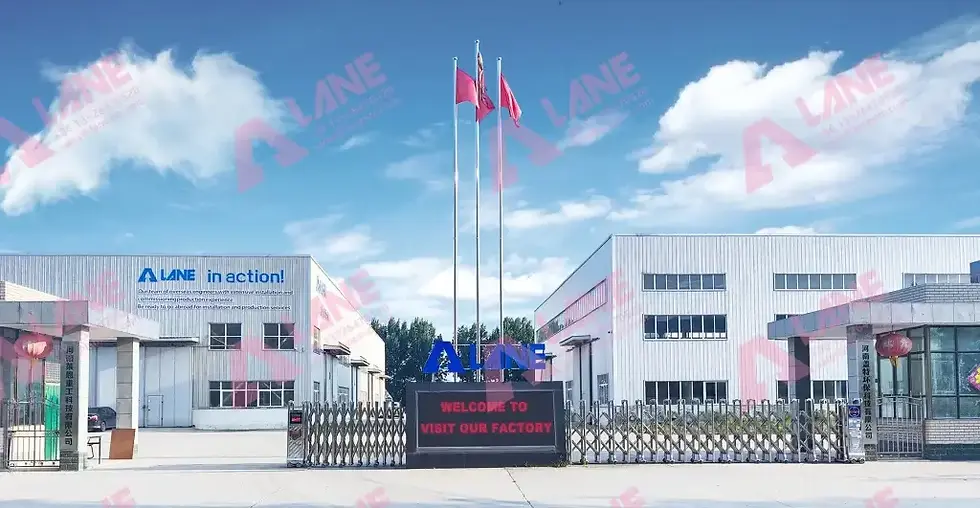
LANE Heavy Industry’s Machinery has developed advanced SOP production lines that optimize the sustainability of SOP fertilizer from brine and ensure strict quality control, making this green fertilizer accessible and reliable for farmers worldwide.
What Is Industrial SOP Fertilizer from Brine?
Industrial refers to the industrial-scale production of potassium sulfate (K₂SO₄) fertilizer using naturally occurring brine as the primary mineral source. Brine is saline water which contains dissolved minerals, commonly sourced from:
Salt lakes
Inland saline lakes
Underground brine reservoirs
Evaporation ponds
Typical brine composition includes:
Potassium chloride (KCl)
Magnesium sulfate (MgSO₄)
Sodium chloride (NaCl)
Magnesium chloride (MgCl₂)
Sulfate ions
These dissolved minerals are processed through extraction, purification, crystallization, reaction, and granulation to produce high-purity SOP fertilizer. The main objective of industrial SOP fertilizer from brine is to produce premium potassium fertilizer while minimizing mining waste and reducing environmental burden.

Industrial SOP Fertilizer from Brine: Sustainable Production and Quality Control
In the global pursuit of food security and sustainable agricultural practices, the choice of fertilizer has never been more critical. Potassium sulfate (SOP), or K2SO4, has emerged as the preferred potassium source for high-value, chloride-sensitive crops. However, the traditional method of production—the Mannheim process—is often criticized for its high energy consumption and the generation of corrosive hydrochloric acid as a byproduct. As the industry pivots toward greener solutions, the production of industrial SOP fertilizer from brine has become a beacon of sustainability.
By utilizing the advanced SOP fertilizer production lines from LANE Heavy Industry, manufacturers can now transform natural salt lake resources into premium nutrients. This article delves into the technicalities of producing industrial SOP fertilizer from brine, the importance of rigorous quality control, and the mechanical innovations that make this green alternative possible.
The Shift Toward Brine-Based Sustainability
The primary driver behind the popularity of industrial SOP fertilizer from brine is its environmental profile. Salt lakes are rich in potassium, magnesium, and sulfate ions. Unlike the Mannheim process, which requires the reaction of potassium chloride with sulfuric acid at extreme temperatures, the brine-based method relies on physical separation and fractional crystallization.
This approach offers several key advantages:
Lower Carbon Footprint: The initial concentration of minerals often occurs in solar evaporation ponds, leveraging renewable energy.
Chloride-Free Integrity: The SOP fertilizer from brine is naturally low in chloride, making it ideal for crops like tobacco, grapes, citrus, and berries.
Circular Economy: The mother liquor from the production process can often be recycled back into the salt lake system, minimizing waste.

LANE Production Line Features
A modern industrial SOP fertilizer from brine plant can be built around LANE Heavy Industry’s machinery and integrated production-line design. Based on LANE’s published material, their SOP systems emphasize automation, corrosion-resistant components, scalable capacity, and energy-efficient operation. our approach is aimed at helping producers build turnkey plants suited to different output targets, from smaller lines to industrial-scale facilities.
Typical equipment in an industrial SOP fertilizer from brine line includes raw-material storage and feeding systems, reactors or conversion units, crystallizers, cage crusher, double roller granulator, dryers, coolers, vibrating screening machines, coating systems, and automatic packaging machines. LANE also highlights chloride control, closed-system handling, and quality testing as important technical points for maintaining fertilizer purity. For manufacturers, that means the line is not just a collection of machines; it is a coordinated system for stable output and product consistency.
Quality Control Points
Producing premium SOP fertilizer from brine demands relentless quality control at every stage. LANE incorporates in-line sensors and automated sampling stations that provide real-time data on granule moisture, hardness, and size distribution. This data feeds into a central PLC control panel, allowing operators to instantly adjust granulator speed, dryer temperature, or binder flow to maintain product within tight tolerances.
An industrial SOP fertilizer production line should include routine testing during production. Monitoring chloride, potassium, sulfur, moisture, and particle size helps keep the product within spec. In practice, this is what separates a reliable industrial SOP fertilizer from brine operation from a plant that struggles with inconsistent output.
FAQ
1. What is industrial SOP fertilizer from brine?
Industrial SOP fertilizer from brine is potassium sulfate fertilizer produced from potassium-rich brine resources through extraction, purification, crystallization, and granulation.
2. Why is SOP fertilizer better than MOP?
SOP is chloride-free, making it safer for chloride-sensitive crops and premium agriculture.
3. What equipment is needed for SOP production?
Main equipment includes extraction systems, reactors, crystallizers, centrifuges, dryers, granulators, screeners, and packaging machines.
4. Is brine-based SOP production environmentally friendly?
Yes. Industrial SOP fertilizer from brine reduces mining dependence, lowers waste generation, and improves resource efficiency.
Email: sales@lanesvc.com
Contact number: +86 13526470520
Whatsapp: +86 13526470520


Comments