


How to Use SOP Fertilizer and the Role of an Efficient SOP Fertilizer Production Line

The Rising Importance of SOP Fertilizer in High-Quality Farming
In the world of modern agriculture, understanding how to use SOP fertilizer correctly has become an essential skill for growers aiming to improve crop quality rather than just yield. Potassium sulfate (SOP) offers a unique advantage because it delivers potassium and sulfur without contributing chloride—an element that often reduces flavor, color, and market value in sensitive crops. Farmers working with grapes, tea, citrus fruits, potatoes, and greenhouse vegetables now rely heavily on SOP to maintain premium standards.
Potassium sulfate is typically applied during critical growth stages: before flowering, during fruit enlargement, or when the plants are under stress. Each application method - whether by spreading, irrigation, or side application - has its specific purpose. For instance, irrigation helps vegetable growers precisely control nutrient delivery, while orchard growers can choose to apply it in strips around the root system to achieve sustained nutrient release. When growers understand how to use potassium sulfate fertilizer based on the type of crop and soil conditions, they can immediately gain an advantage in terms of product quality and shelf life.
Behind the Scenes: How an SOP Fertilizer Production Line Works
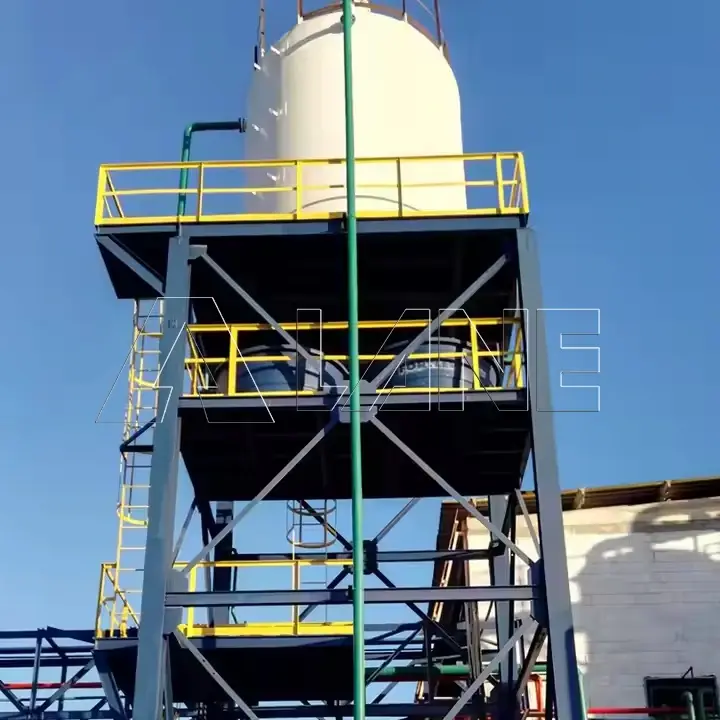
While farmers focus on application, fertilizer producers must understand how an efficient SOP fertilizer production line functions. Modern production technology depends on a continuous, carefully controlled workflow. Raw potassium chloride travels from storage silos through screw conveyors, bucket elevators, and belt conveyors into the furnace feed hopper. Concentrated sulfuric acid, delivered by a sulfuric acid pump, enters the process through corrosion-resistant pipelines.
Inside the reaction furnace, high temperature and controlled material flow convert the inputs into potassium sulfate. The furnace is supported by a PLC control panel, ensuring safe operation, stable heat levels, and precise dosing. The resulting gas streams are handled by a dedicated absorption system consisting of a gas cooler, sulfuric acid scrubber, packed absorption tower, and mist eliminator, which efficiently recover hydrogen chloride into usable hydrochloric acid.
After reaction and gas treatment, the SOP material is cooled using a vibrating fluid bed cooler or a rotary cooler, then refined through a hammer crusher and vibrating screening machine. Final material flows into storage silos before entering the automatic packing machine. What seems like a simple fertilizer is in fact the result of a multi-stage industrial process supported by specialized, corrosion-resistant machinery.

Why LANE’s SOP Production Technology Stands Out
LANE has spent years refining the technical aspects of their SOP fertilizer production line. Their systems are known for durability and stable operation, using PTFE-lined pipelines, high-precision feeding systems, and fully automated PLC control. For investors and manufacturers, this means lower operating costs, higher purity SOP, and significantly reduced environmental impact due to closed-loop gas absorption and efficient water circulation.
Conclusion
Whether you are a grower wondering how to use SOP fertilizer more effectively or a manufacturer exploring the potential of an advanced SOP fertilizer production line, both paths lead to improved agricultural value. SOP offers superior crop quality, while modern production technology ensures consistent supply. Together, they form a powerful partnership for the future of sustainable agriculture.
Email: sales@lanesvc.com
Contact number: +86 13526470520
Whatsapp: +86 13526470520


Comments