


How to Produce SOP Fertilizer from Brine: Process, Technology & Best Practices


SOP fertilizer, or sulfate of potash, is one of the most valuable chloride-free potassium fertilizers for high-value crops. Unlike standard Muriate of Potash (MOP), SOP delivers vital potassium and sulfur without introducing high levels of chloride. chloride can degrade soil health and stunt crop development in arid or saline environments. The most common way to produce SOP is Mannheim process, which is an energy intensive chemical reaction process. However, facing strict environmental regulations and volatile acid pricing, the global market is shifting toward alternative sourcing strategies. Many fertilizer manufacturers are now researching how to produce SOP fertilizer from brine because brine resources offer a cost-effective and sustainable source of potassium minerals.
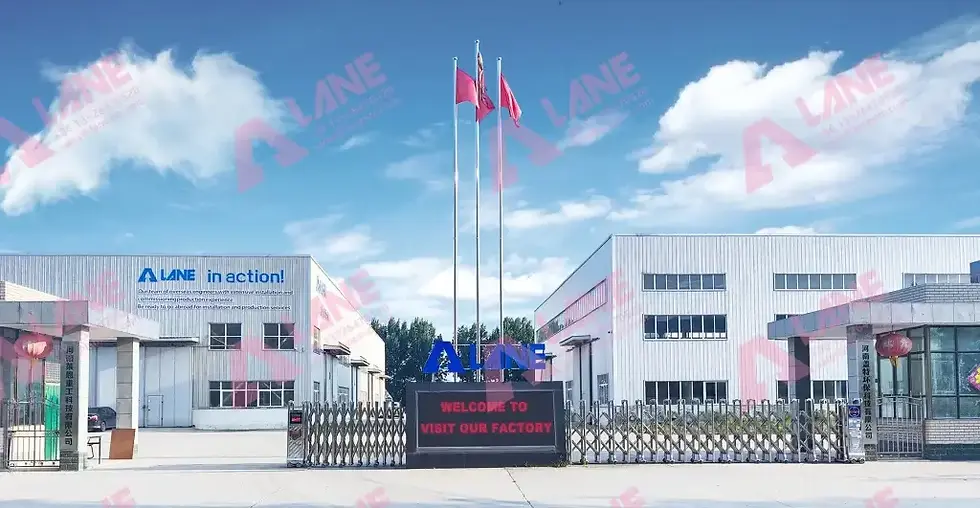
With advanced SOP fertilizer machinery from LANE Heavy Industry, producers can establish modern SOP fertilizer plants that deliver high purity, stable output, and automated operation. This technical guide explores how to produce SOP fertilizer from brine by combining precise fractional crystallization chemistry with high-capacity processing equipment engineered by LANE Heavy Industry Machinery Technology Co., Ltd.
What SOP is and why brine matters
potassium sulfate also known as Sulfate of Potash (SOP), is fertilizer prized for its dual nutrient value and chloride free composition. It is essential for chloride sensitive crops such as fruits, vegetables, tobacco, and some nuts. Brine and bitterns from salt lakes, saltworks, and desalination byproducts often contain valuable potassium, magnesium, sodium, sulfate, and chloride ions. This makes brine an attractive raw material for producers looking at how to produce SOP fertilizer from brine with lower dependence on mined potassium sulfate.
The brine rout is important because it can turn a low-cost salt stream into a higher-value fertilizer. In many cases, the process can also recover byproducts such as sodium chloride or magnesium salts and improves overall profit of the production line. For plants seeking modern industrial performance, LANE Heavy Industry’s fertilizer production line can integrate the main stages from pre-treatment to drying and packaging.

Step-by-step production route
1. Brine collection and analysis
The first step in how to produce SOP fertilizer from brine is sampling and testing the feed stream. Operators need to measure potassium, sodium, magnesium, sulfate, chloride, calcium, and total dissolved solids. These values determine whether the plant should favor evaporation, cooling crystallization, or a conversion-based process.
Accurate analysis prevents poor crystallization behavior and unnecessary losses. It also helps engineers choose the right dosing, residence time, and temperature profile. In a LANE Heavy Industry fertilizer production line, this stage is supported by stable pumping, filtration, and process control equipment.
2. Pre-treatment and impurity removal
Brine often contains suspended solids, organics, and trace impurities that can foul heat exchangers and crystallizers. Pre-treatment may include clarification, filtration, pH adjustment, and removal of insoluble matter. This step is critical in how to produce SOP fertilizer from brine because cleaner feed improves yield and protects downstream equipment.
A well-designed line also reduces scaling and blockages, which lowers maintenance costs. LANE’s process equipment can be arranged to keep the material flow stable and reduce process interruptions. For long-term operation, this is one of the most important best practices.
3. Conversion to intermediate salts
In many plants, the brine is first converted into an intermediate salt before final SOP crystallization. Common intermediates include schoenite or glaserite, depending on the chemistry of the raw brine. This is a central step in how to produce SOP fertilizer from brine, because it selectively concentrates potassium in a form that can be refined into SOP.
Temperature control, residence time, and mixing intensity are all important here. If conditions are too aggressive, crystals may form with poor size or trapped impurities. LANE Heavy Industry’s fertilizer production line can be configured with controlled reactors and crystallizers to manage this conversion efficiently.
4. Crystallization of SOP
Crystallization is the heart of how to produce SOP fertilizer from brine. After conversion, the intermediate material is transformed into potassium sulfate crystals under controlled supersaturation, cooling, or evaporation conditions. The goal is to produce uniform crystals with good purity, manageable moisture, and acceptable particle size. Vacuum crystallization and cooling crystallization are commonly used in industrial plants. These technologies allow operators to control crystal growth and improve separation performance
In a LANE production line, crystallization systems can be paired with heat recovery and process automation to improve consistency and reduce energy waste.

5. Solid-liquid separation
Once SOP crystals are formed, they must be separated from the mother liquor. Centrifuges, dual filters, and washing systems are used to recover product and remove residual salts. This stage is essential in how to produce SOP fertilizer from brine because it directly affects purity and final yield.
Proper washing helps reduce sodium chloride contamination and improves fertilizer quality. If separation is weak, the product may cake or fail quality standards. A well-matched LANE Heavy Industry line supports efficient separation with reliable downstream handling.
6. Drying, screening, and packaging
After separation, the SOP product usually contains residual moisture. Rotary drying equipment brings moisture down to spec, while vibrating screening and classification ensure consistent particle size. This is the finishing stage in how to produce SOP fertilizer from brine, and it determines how the product performs in storage, transportation, and field application.
Some producers sell powdered SOP, while others use granulation for better flowability and dust control. Packaging systems then fill bags or bulk containers for shipment. LANE Heavy Industry’s fertilizer production line can integrate drying, screening, and automatic packaging into one streamlined process.
Best practices for stable operation
after learning how to produce SOP fertilizer from brine, manufacturer should focus on a few practical best practices. First, maintain consistent brine analysis so the process design always matches the feed composition. Second, control scaling through cleaning, anti-scale measures, and proper operating windows. Third, optimize washing and separation to reduce impurity carryover.
Energy efficiency also matters. Heat integration, mother liquor recycling, and byproduct recovery can significantly improve profitability. Another best practice is to design the line for flexibility, because brine composition can change seasonally or by source. LANE Heavy Industry’s modular fertilizer production line is well suited to this type of adaptable operation.
FAQ
What is SOP fertilizer?
SOP fertilizer is potassium sulfate fertilizer containing potassium and sulfur with low chloride content.
Why is brine used for SOP fertilizer production?
Brine contains potassium-rich minerals that can be economically processed into SOP fertilizer.
What equipment is needed to produce SOP fertilizer from brine?
Main equipment includes evaporators, crystallizers, reactors, dryers, granulators, coolers, and screening machines.
What is the main benefit of SOP fertilizer?
SOP fertilizer is ideal for chloride-sensitive crops and improves crop quality and yield.
Why choose LANE Heavy Industry machinery?
LANE Heavy Industry provides automated, energy-efficient, and customized fertilizer production line solutions.
Email: sales@lanesvc.com
Contact number: +86 13526470520
Whatsapp: +86 13526470520


Comments