


How to Choose the Right Automatic Compost Turning and Aeration System for Your Organic Fertilizer Production Line
- Efat Elahi
- Jan 14
- 4 min read

Table of Contents
Introduction: The Heart of Your Production Line
The 5 Critical Factors for Your Selection
2.1. Assess Your Feedstock Profile and Volume
2.2. Calculate Your Required Processing Capacity (Tons/Day)
2.3. Evaluate Design & Durability for a 24/7 Environment
2.4. Analyze the Aeration Efficiency & Turning Mechanism
2.5. Prioritize Service, Support, and Operational Cost
Why LANE Heavy Industry Systems Are Engineered for Your Line
Model LT-3000: The High-Efficiency Workhorse
Model LT-5000: The Heavy-Duty Volume Champion
Implementing Your System for Maximum ROI
Conclusion: The Choice That Defines Your Output
Frequently Asked Questions (FAQ)
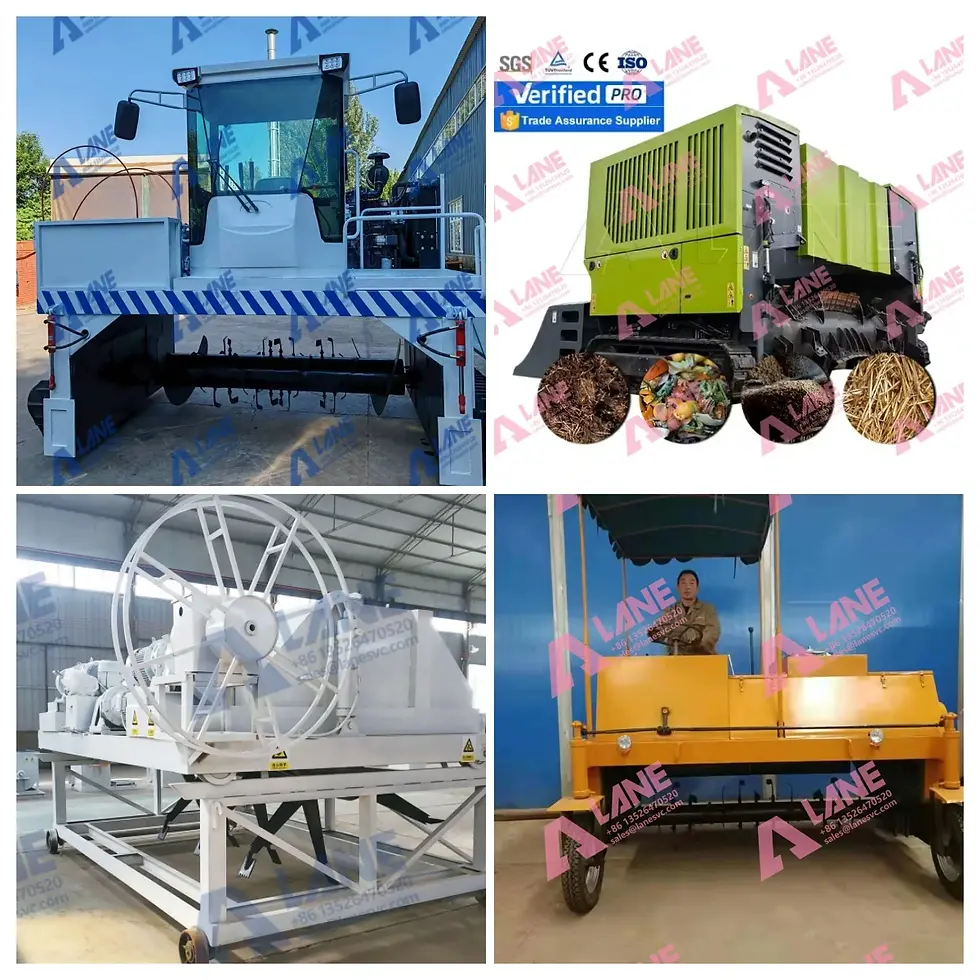
1. Introduction: The Heart of Your Production Line
An automatic compost turning and aeration system, directly determines the product quality, operational efficiency, and long-term profitability of your organic fertilizer production line. Traditional manual or semi-automatic turning methods are inefficient, labor-intensive, and prone to uneven turning, leading to incomplete decomposition and low product qualification rates. Selecting the correct production model determines your product quality, operational efficiency, and long-term profitability. This guide, informed by LANE Heavy Industry's engineering expertise, will help you evaluate the key factors to make an informed investment that powers your Organic fertilizer production line for years to come.
2. Step 1: Assess Your Raw Material Volume and Type
Your raw materials sometimes determine which type of automatic compost turning and aeration system you will use.
Daily/Annual Volume: Calculate the total volume of raw materials (manure, green waste, biosolids, etc.) you will process. This determines the machine size. A system too small output becomes bottleneck and large systems wastes energy.
Feedstock Characteristics: Are your material primarily loose yard waste, viscous poultry litter, or heavy municipal solids? The abrasiveness, density, and moisture content dictate the required power, drum design, and flail strength of the turner. A machine built for light materials will fail under heavier, more abrasive loads.
3. Step 2: Evaluate Your Site Layout and Infrastructure
Your physical site dictates the machine's form.
Windrow vs. Channel Confinement: Do you use open-air long windrows or concrete channels/tunnels? This choice separates Crawler windrow turners from track-driven channel turners. Self-propelled turners offer flexibility in open yards, while groove turners are ideal for controlled, space-optimized facilities.
Space and Maneuverability: Consider turning radius, windrow spacing, and headland space. This ensures the machine you select can operate efficiently within your existing or planned pad layout.
4. Step 3: Define Your Required Output and Cycle Time
Your business goals shape You automatic compost turning and aeration system's specifications.
Target Composting Cycle: Aiming for 21-day compost versus a 60-day cure requires different turning frequency and aeration intensity. Communicate your cycle goal to ensure the system's automation programming can meet it.
Production Line Integration: Consider how the turner fits into your full line. Will it feed directly into a shredder, screener, or bagging system? Output height and mobility can impact this downstream flow.

5. Step 4: Compare Critical Machine Features & Durability
Here, engineering and component quality are paramount. Look for:
Power & Drive System: Robust diesel engines or electric motors matched with heavy-duty gearboxes ensure consistent torque under load. Hydraulic systems should be from reputable brands for reliability.
Construction & Wear Parts: The frame should be high-tensile steel. The drum and flails are consumables; check their material (e.g., high-carbon or alloy steel) and ease of replacement. A durable automatic compost turning and aeration system minimizes downtime.
Aeration Efficiency: The turning drum's design should do more than mix—it must actively fluff and loft the pile to pull in air. A system that merely stirs will not achieve optimal aerobic conditions.
6. Step 5: Prioritize Manufacturer Support and Service
The best machine is only as good as the support behind it.
Technical Expertise: LANE Heavy Industry understands the biology of composting, not just mechanical engineering. We help realize our customer’s goal. we optimize customers recipes and cycle time.
Parts Availability & Service Network: LANE always make sure wear parts are available. Proximity of service technicians for major repairs is a key risk-mitigation factor.
Warranty and Training: LANE provides 3 years warranty on their compost turners. We provide training to your operator to ensures you achieve the system's designed performance and longevity.

7. Conclusion: Invest in Precision for Premium Product
Choosing the right automatic compost turning and aeration system is a strategic decision that impacts every aspect of your organic fertilizer business. By systematically evaluating your material volume, site constraints, production goals, and machine build quality, you invest in a solution that delivers consistent, high-quality compost efficiently. Partnering with an experienced manufacturer provides the technical support to turn this capital investment into a reliable, profit-generating engine at the heart of your production line.
Frequently Asked Questions (FAQ)
Q1: What's the main difference between a windrow turner and a channel turner?
A: A self-propelled windrow turner operates on open composting pads, turning long rows. A channel turner runs on rails inside concrete-walled channels, offering superior process control and space efficiency but at a higher infrastructure cost. The choice depends on your site and production model.
Q2: How often should the automatic system turn the compost pile?
A: The optimal frequency depends on the recipe and stage of the cycle (e.g., thermophilic vs. curing). A high-quality system allows programmable scheduling. Typically, during the hot phase, turning occurs every 1-3 days. The right system automates this for consistency.
Q3: Can one machine handle very different types of feedstock?
A: While versatile, extreme variations (e.g., switching from light leaves to dense paunch manure) may require adjustments to turning speed or flail type. Discuss your full feedstock range with your manufacturer to ensure the selected model has the adjustable power and robust components to handle it.
Q4: What are the key maintenance points for these systems?
A: Regular greasing of bearings, inspection and rotation/replacement of flails, checking hydraulic fluid and hose integrity, and cleaning debris from the engine compartment are crucial. A well-designed system prioritizes easy access to these maintenance points.
Q5: How do I calculate the Return on Investment (ROI) for this equipment?
A: ROI is calculated from: Labor Savings (reduced equipment operators) + Increased Output Value (faster cycles, more product) + Quality Premium (consistent, superior fertilizer) + Cost Avoidance (less fuel, fewer loaders). Most commercial operations see a full ROI within 1-3 years.

Email: sales@lanesvc.com
Contact number: +86 13526470520
Whatsapp: +86 13526470520


Comments