


How Automated Liquid Fertilizer Production Lines Are Transforming Modern Agriculture

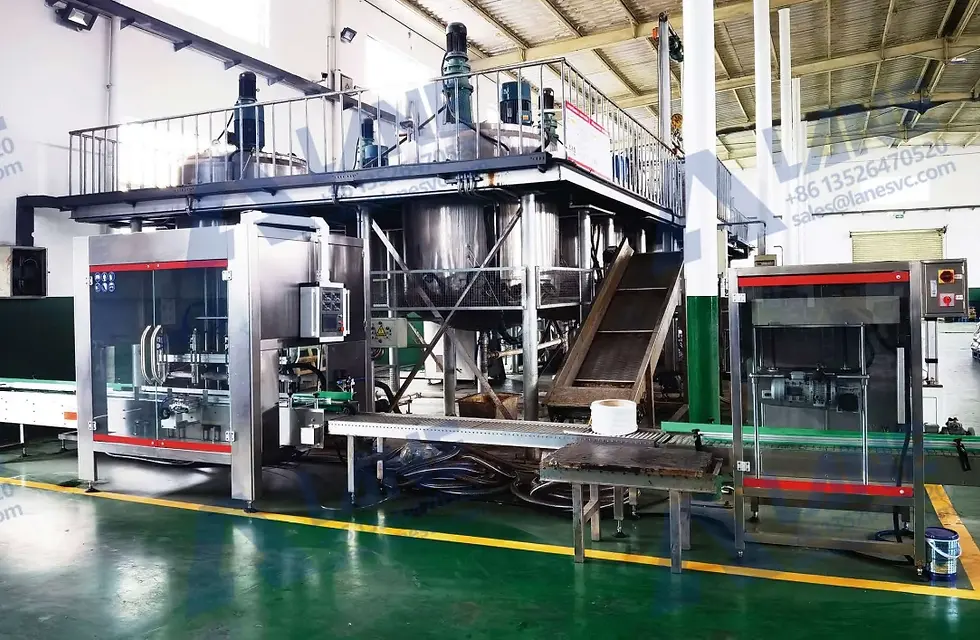
Automated liquid fertilizer production line technology is transforming how agricultural nutrients are formulated, processed, and delivered. As farms demand faster nutrient absorption, precise feeding, and flexible crop-specific formulations, liquid fertilizers have become one of the fastest-growing segments in the fertilizer industry. An automated system brings consistency, safety, and accuracy to every step—from raw material dissolution to final packaging—allowing producers to maintain high-quality output at industrial scale.
This article explains how an automated liquid fertilizer production line works, why it improves operational efficiency, and what equipment is essential for building a high-performing system.
Why Automated Systems Are Dominating Liquid Fertilizer Production
Automation has shifted the fertilizer sector from labor-intensive batch mixing to consistent and traceable digital manufacturing. When using an automated liquid fertilizer production line, producers gain:
• Precision in Nutrient Formulation
Automation ensures accurate dosing of nitrogen, phosphorus, potassium, micronutrients, humic acids, amino acids, and water-soluble additives.
• Continuous, High-Speed Production
Unlike manual operations, automated systems maintain continuous flow, enabling higher output with fewer labor requirements.
• Enhanced Safety & Clean Operations
Closed-loop pipelines, automatic loading, and PLC-controlled mixing reduce chemical exposure and minimize contamination risks.
• Better Quality Control
Sensors, flowmeters, automated pH/EC detection, and real-time adjustment prevent formulation errors and ensure every batch meets standards.
Core Workflow of an Automated Liquid Fertilizer Production Line
A typical automated liquid fertilizer production line follows a fluid, computer-controlled process integrating dissolved nutrient preparation, mixing, filtration, and packaging.
Step 1: Automated Raw Material Feeding
Solid powders (urea, MAP, potassium nitrate, trace elements) and liquid additives (fulvic acid, amino acid concentrate) are loaded into:
automatic feeding hoppers
quantitative screw feeders
liquid dosing pumps
Everything is measured by PLC systems for precise formulations.
Step 2: Dissolving and Premix Preparation
Raw materials are dissolved inside a stainless-steel dissolving tank equipped with:
level sensors
heating jackets (optional)
high-speed agitators
The automated liquid fertilizer production line uses temperature and mixing-speed controls to ensure complete solubility without residue.
Step 3: Homogeneous Blending in the Main Mixing Tank
The premix enters the main stainless steel mixing tank, where nutrients fully integrate.Automation controls:
agitator speed
recirculation flow
dosing time
pH/EC monitoring
The result is a stable, uniform fertilizer solution tailored to crop requirements.
Step 4: Dual-Stage Filtration System
A defining feature of any automated liquid fertilizer production line is its filtration.
Typical configuration:
Primary mesh filter removes visible impurities.
Secondary dual-filter system removes micro-particles that could clog drip irrigation or foliar sprayers.
This guarantees compatibility with irrigation systems such as drip lines, sprinklers, pivots, and fertigation units.
Step 5: Storage and Buffering
Filtered liquid fertilizer flows into a sealed stainless steel storage tank equipped with:
anti-corrosion coating
internal mixers
liquid level detection
nitrogen-sealed environment (optional)
This prevents oxidation and maintains nutrient stability until packaging.
Step 6: Automated Packaging
The line concludes with:
PLC-controlled filling system
automatic capping machine
labeling machine
conveyor output line
Bottles, jerrycans, drums, or IBC tanks can all be filled with high accuracy (±0.2–0.5%).

Advantages of an Automated Liquid Fertilizer Production Line
Choosing an automated liquid fertilizer production line brings a range of advantages that directly improve efficiency, consistency, and scalability for modern fertilizer manufacturers.
1. Higher Production Efficiency
Automation eliminates manual dosing, stirring, and transfer steps. With automatic metering pumps, PLC-controlled mixing, and continuous batching systems, the entire line maintains a steady output—often doubling efficiency compared with manual production.
2. Accurate Nutrient Formulation
Precision dosing systems ensure each batch meets the exact NPK ratio and micronutrient levels required. This consistency is crucial, especially for large agricultural suppliers who must guarantee uniform fertilizer quality across thousands of hectares.
3. Stable, Repeatable Product Quality
Automated temperature control, mixing speed regulation, and filtration stages reduce formulation errors. The resulting liquid fertilizers show better solubility, purity, and shelf stability.
4. Lower Labor Costs & Reduced Human Error
Operators only need to monitor the system rather than manually handle raw materials. This reduces labor intensity, minimizes contamination risks, and keeps errors—such as mis-mixing or overdosing—near zero.
5. Real-Time Monitoring & Data Tracking
Smart systems record flow rates, PH levels, viscosity, and batch data. This helps manufacturers maintain traceability, optimize recipes, and conduct quality audits with reliable digital records.
Conclusion
The automated liquid fertilizer production line represents the future of fertilizer manufacturing - precise, safe, scalable, and suitable for producers of all sizes. By integrating processes such as dissolution, mixing, filtration, storage, and automated packaging, enterprises can achieve continuous production, stable quality, and strong market competitiveness. With the continuous development of agricultural biotechnology and irrigation fertilization technology, the automated liquid fertilizer system will become an indispensable part of modern nutrient management.
Email: sales@lanesvc.com
Contact number: +86 13526470520
Whatsapp: +86 13526470520


Comments