


Hidden Production Issues That Point to the Need for a Hammer Crusher for Cat Litter
- celine zhang
- Dec 29, 2025
- 4 min read

Introduction: When Production Problems Do Not Start Where You Think
In cat litter manufacturing, quality issues are often blamed on downstream stages like granulation, screening, or packaging. When granules break too easily, dust levels increase, or batch consistency fluctuates, most teams instinctively adjust settings at the end of the line.
However, experienced production managers know that many of these problems originate much earlier. One overlooked stage—material crushing—frequently determines whether the rest of the process runs smoothly or struggles every day.
This is where a hammer crusher for cat litter quietly becomes a decisive factor, even if it is rarely discussed in daily operations meetings.
Rather than being a purely mechanical choice, crushing equipment affects raw material behavior, process stability, and long-term scalability across the entire production line.
Unstable Granule Quality Often Begins Upstream
When finished cat litter shows inconsistent clumping strength or uneven particle surfaces, the instinct is to adjust binders, moisture levels, or granulator speed. While these factors matter, they cannot fully compensate for poorly prepared raw material.
Common upstream issues include:
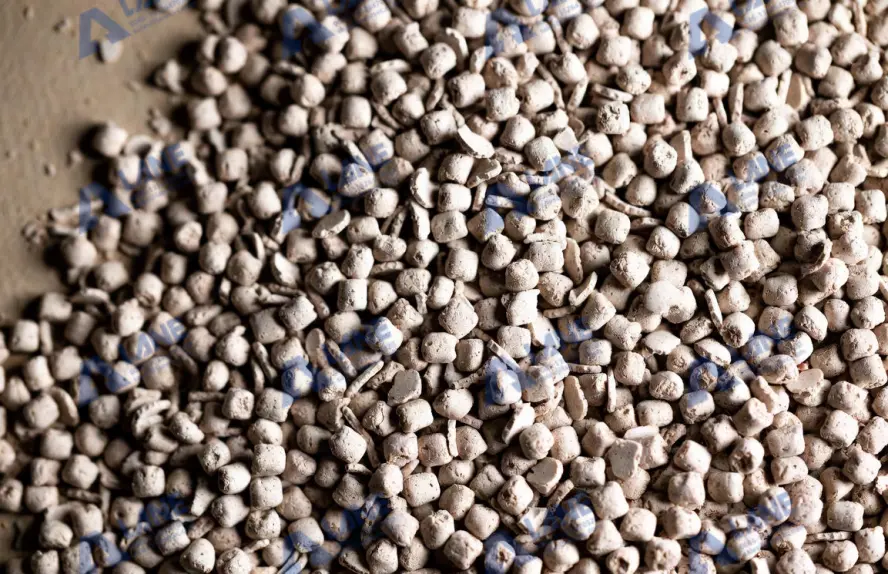
Irregular particle size entering the granulation stage
Overly large fragments mixed with fine powder
Inconsistent material density between batches
These conditions make it difficult for downstream equipment to perform consistently. Even the most advanced granulator cannot fully correct material that was never properly reduced and conditioned.
In many cases, the absence of a suitable hammer crusher for cat litter creates hidden variability that compounds further down the line.
Operational Symptoms Managers Often Ignore
Some production warning signs appear gradually and are easy to dismiss as “normal.” Over time, however, they become persistent drains on efficiency.
Typical symptoms include:
Screening machines clogging more frequently
Increased recirculation or reprocessing of material
Rising dust levels despite unchanged formulations
Higher energy consumption with no increase in output
Because these issues appear in different sections of the plant, teams may treat them as isolated problems. In reality, they often share a common origin in inadequate crushing performance. A properly selected hammer crusher for cat litter helps stabilize material flow before these inefficiencies multiply.

Why Manual Adjustments Can Not Fix Crushing Problems
Many factories rely heavily on operator experience to manage quality fluctuations. Adjustments are made to moisture, feed rate, or screen size, sometimes several times a day. While this may offer temporary relief, it does not address the underlying limitation of the crushing stage.
Manual intervention cannot:
Eliminate oversized fragments consistently
Control particle breakage patterns
Maintain uniform material preparation over long runs
As production volumes grow, this dependency on constant adjustment becomes unsustainable. At that point, the role of a hammer crusher for cat litter shifts from optional equipment to a structural necessity within the line.
Crushing Equipment as a Strategic Production Decision
Choosing crushing equipment is not simply about reducing material size. It is a strategic decision that affects:
Process stability
Labor efficiency
Maintenance planning
Future capacity expansion
A hammer crusher for cat litter offers advantages in continuous operation and adaptability to different material inputs, making it suitable for modern, automated lines. More importantly, it supports consistent upstream preparation, which allows downstream machines to operate closer to their optimal range instead of compensating for variability.
Manufacturers who treat crushing as a core process—rather than an afterthought—often see improvements across the entire production system, not just in material reduction.
When Production Scale Makes Crushing More Critical
Small-scale operations may tolerate variability because volumes are manageable and adjustments are frequent. As output increases, however, even minor inconsistencies can escalate into systemic problems.
At higher capacities:
Raw material differences become more pronounced
Downtime becomes more costly
Quality deviations affect larger product volumes
In these conditions, the hammer crusher for cat litter plays a stabilizing role by creating predictable input material for every downstream step. This predictability is essential for factories aiming to scale without sacrificing quality or control.
Working with Equipment Suppliers Early
One common mistake is selecting crushing equipment late in the project, after granulators and screening systems are already defined. This approach often forces compromises that limit overall performance.
Engaging an experienced equipment supplier early allows crushing solutions to be aligned with:
Raw material characteristics
Desired product specifications
Long-term production goals
Companies like LANE focus on supplying integrated cat litter equipment rather than isolated machines. This system-oriented mindset helps manufacturers avoid mismatches between crushing, forming, and finishing stages.

Conclusion: Fix the Source, Not the Symptoms
Many production issues in cat litter manufacturing are treated at the surface level, long after they have formed upstream. By recognizing the importance of crushing quality, manufacturers can prevent downstream inefficiencies rather than reacting to them.
A hammer crusher for cat litter is not just a piece of equipment—it is a foundational element in achieving stable, scalable, and efficient production. Addressing material preparation at its source allows the entire line to perform as intended, with fewer adjustments, lower waste, and more consistent results.
For producers looking to improve long-term performance, revisiting the crushing stage is often the smartest place to start.
Email: sales@lanesvc.com
Contact number: +86 13526470520
Whatsapp: +86 13526470520


Comments