


Common Mixing Problems That Often Trace Back to a Cat Litter Mixer Machine
- celine zhang
- Dec 29, 2025
- 4 min read

In many cat litter factories, production issues are often explained away as formulation errors, raw material instability, or operator inconsistency. While these factors do play a role, experienced manufacturers know that some of the most persistent problems originate earlier in the process—specifically during mixing.
The cat litter mixer machine is frequently treated as a basic or secondary piece of equipment. Once installed, it is rarely questioned again. However, when downstream processes begin to show instability, the root cause can often be traced back to insufficient or inconsistent mixing performance.
Mixing Issues Are Often Misdiagnosed
When production output becomes inconsistent, the first reaction is usually to adjust the recipe or tweak process parameters. Moisture levels are modified, binders are increased, or granulation speed is altered. These changes may temporarily reduce visible defects, but they rarely eliminate the underlying issue.
In reality, poor material integration at the mixing stage can quietly undermine the entire production line. If the cat litter mixer machine does not distribute raw materials evenly, every process that follows must compensate for that imbalance—often unsuccessfully.
Uneven Mixing Creates Problems Long After the Mixer Stage
One of the challenges with mixing-related issues is that they rarely appear immediately. Material may look acceptable as it exits the mixer, only to cause problems several stages later.
Common downstream effects include unstable granule formation, inconsistent pellet density, and uneven drying behavior. These symptoms are often blamed on pelletizers, dryers, or screens, but they are frequently the delayed result of incomplete mixing upstream.
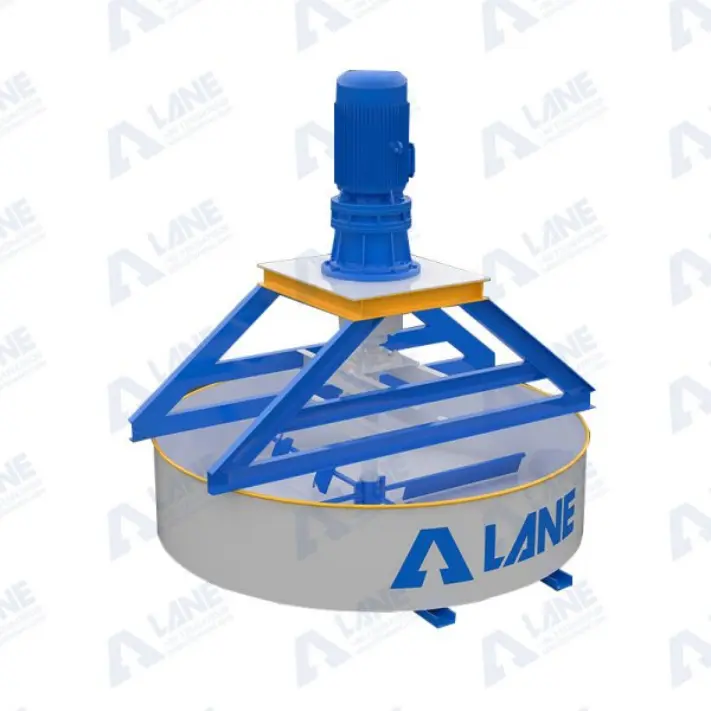
This is why experienced operators understand that a cat litter mixer machine is not just a preparation step—it sets the baseline for the entire process.
Common Signs That Point to a Mixing Problem
Certain production issues consistently signal that mixing quality may be insufficient. These include:
Frequent adjustments required during granulation
Increased fines generation during screening
Visible color or texture variation in finished litter
Binder overuse to compensate for weak particle bonding
Rising return material rates
When these symptoms occur together, they often indicate that the cat litter mixer machine is not delivering uniform material to downstream equipment.

Why the Cat Litter Mixer Machine Is Often Overlooked
Despite its importance, the mixer is commonly underestimated. There are several reasons for this:
First, mixers appear mechanically simple compared to pelletizers or dryers.
Second, they rarely cause immediate shutdowns.
Finally, many factories operate under the assumption that “mixing is mixing,” regardless of material behavior or production scale.
As production volumes increase and formulations become more complex, this assumption no longer holds. A cat litter mixer machine that performs adequately in small batches may struggle under continuous, high-throughput conditions.
When Process Adjustments Can No Longer Compensate
In early stages, skilled operators can compensate for inconsistent mixing by adjusting downstream equipment. However, as capacity expands, this manual balancing act becomes unsustainable.
At higher outputs, even small inconsistencies in raw material distribution can escalate into significant quality fluctuations. At this point, process optimization alone cannot resolve the issue. The mixer itself must be reconsidered—not just as a machine, but as a functional component of the overall system.
This is often the moment when manufacturers begin re-evaluating the role of the cat litter mixer machine in their production strategy.
Rethinking the Role of the Cat Litter Mixer Machine
Rather than viewing the mixer as a standalone unit, progressive manufacturers treat it as a stabilizing element within the production line. Its role is not simply to combine materials, but to ensure that each batch entering the next stage behaves predictably.
A well-integrated cat litter mixer machine supports stable granulation, smoother drying, and more consistent screening performance. This systems-based perspective is increasingly important as factories pursue automation and scalable production.
How Equipment Support Helps Resolve Mixing-Related Issues
When mixing problems persist, equipment support becomes critical. This does not necessarily mean replacing the mixer immediately. Instead, it involves analyzing material behavior, throughput demands, and process flow in context.
Professional equipment suppliers approach the cat litter mixer machine as part of a coordinated system rather than an isolated unit. By aligning mixer performance with upstream feeding and downstream processing requirements, long-term stability can often be achieved.
The Value of Process-Oriented Equipment Design
As cat litter production becomes more specialized, equipment design must follow suit. A mixer optimized for one material may not perform equally well with another, especially when ingredient ratios or moisture levels change.
This is why manufacturers increasingly seek equipment partners who understand process behavior, not just machine specifications. A cat litter mixer machine designed with process adaptability in mind can reduce operational stress across the entire line.

Conclusion: Fixing Mixing Problems Starts at the Right Stage
Many production challenges in cat litter manufacturing are treated at the symptom level rather than at their source. While downstream adjustments may offer temporary relief, long-term stability begins at the mixing stage.
By reassessing the role and performance of the cat litter mixer machine, manufacturers can address issues before they cascade through the production line. In doing so, they not only improve product consistency but also create a more resilient and scalable operation.
Email: sales@lanesvc.com
Contact number: +86 13526470520
Whatsapp: +86 13526470520


Comments