


1-3 TPH Small Scale Organic Fertilizer Production Business Plan for The Philippines
- Efat Elahi
- Mar 5
- 5 min read

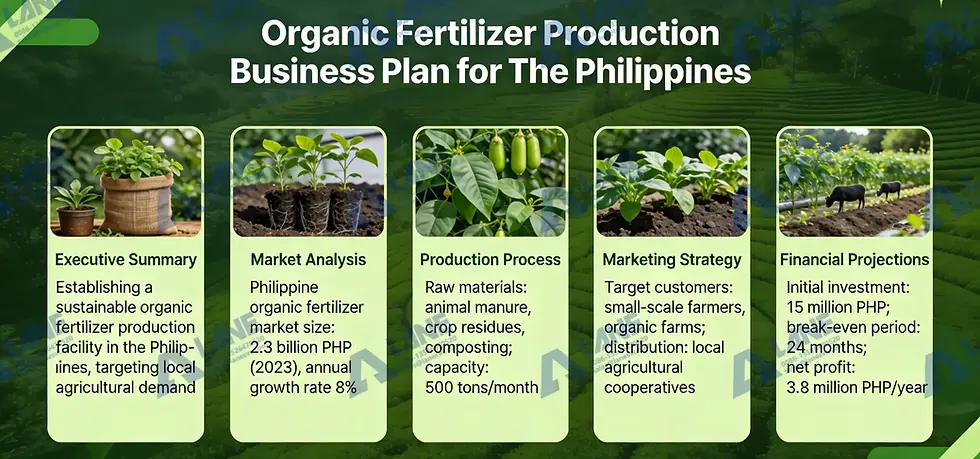
Table of Contents
Introduction
Market Overview for Organic Fertilizer in the Philippines
Why Choose LANE Heavy Industry’s Machinery for Organic Fertilizer Production
Overview of 1-3 TPH Small Scale Production Line
Step-by-Step Guide to Starting an Organic Fertilizer Production Business
Profitability and Financial Considerations of organic fertilizer production business plan for the Philippines
Conclusion
FAQ
1. Introduction
The demand for organic fertilizers in the Philippines has been increasing because of the growing awareness of the benefits of organic farming. Philippines has vest amount of fertile land. Much of its economy is dependent on agriculture. organic fertilizer production business offers great potential for growth. This organic fertilizer production business plan for the Philippines is designed for small investors, farmers cooperatives, and agricultural startups targeting a 1–3 tons per hour (TPH) small‑scale commercial organic fertilizer plant.
This organic fertilizer production business plan for the Philippines focuses on real‑world feasibility, low startup cost, and strong profitability with the help of LANE Heavy Industry’s small-scale organic fertilizer production line.
2. Market Overview for Organic Fertilizer in the Philippines
The Philippines agricultural industry plays a significant role in the country’s economy. However, decades of usage of chemical fertilizers have led to soil degradation and other environmental issues. This cause farmers to shift towards organic farming practices. The rise in demand for organic products is fueling the need for eco-friendly fertilizers. As a result, starting an organic fertilizer production business in the Philippines can be a highly profitable venture.
The organic fertilizer market in the Philippines is growing at a steady pace, with a projected market value increase over the next decade. Many small-scale farmers, are looking for affordable and sustainable fertilizers, which makes a 1-3 TPH production line an ideal investment for new businesses.
3. Why Choose LANE Heavy Industry’s Machinery for Organic Fertilizer Production?
LANE Heavy Industry is a renowned manufacturer of fertilizer equipment. we have over 20 years of experience in manufacturing fertilizer machinery. we offer advance industrial grade machines designed for efficient fertilizer production. Our 1-3 TPH small-scale organic fertilizer production line is a perfect choice for new entrepreneurs in the Philippines looking to enter the organic fertilizer market. Here’s why:
Efficient Production: The machinery is designed for high efficiency, enabling the production of organic fertilizer at a low cost while ensuring quality.
Durability: Built with robust materials, LANE’s equipment ensures longevity, minimizing maintenance costs.
Environmentally Friendly: LANE’s production line minimizes waste and energy consumption, aligning with sustainable farming principles.
Easy Operation: The machines are user-friendly, making it easy for workers with limited experience to operate them effectively.
Customization: The production line can be customized to suit the specific requirements of Filipino farmers, whether they are producing compost or other organic fertilizer types.

4. Overview of 1-3 TPH Small Scale Production Line
A 1-3 TPH small-scale organic fertilizer production line from LANE Heavy Industry is designed to produce organic fertilizer at a relatively low capacity, making it an excellent choice for new businesses. This small-scale setup is ideal for local markets. It helps farmers access affordable organic fertilizers.
Components of the 1-3 TPH Production Line:
Crusher: The first step in the process is the raw material size reduction. LANE’s crusher can handle various organic materials like plant waste, manure, and other organic matter.
Mixer: The mixer ensures the uniform blending of the raw materials with additives such as microbial agents and other nutrients.
Granulator: The granulation machine forms the mixture into granules, which are easier to handle and apply to crops.
Dryer: Organic fertilizers need to be dried to a specific moisture level to ensure long-term shelf life and efficient use.
Screening Equipment: This equipment removes any undersized or oversized granules, ensuring that only quality product reaches the market.
Packaging Machine: Once the fertilizer has been processed, the final product is packaged in various sizes for distribution.
5. Step-by-Step Guide to Starting an Organic Fertilizer Production Business
5.1 Site Selection
Choosing the right location is critical for the success of your organic fertilizer production business. Look for an area with easy access to raw materials like farm waste or animal manure, and a reliable workforce. Proximity to key markets also plays a vital role in reducing transportation costs.
5.2 Equipment Required
As mentioned earlier, the 1-3 TPH production line from LANE Heavy Industry includes crushers, mixers, granulators, dryers, screening equipment, and packaging machines. Each piece of equipment is crucial for ensuring the smooth and efficient production of organic fertilizer.
5.3 Raw Materials and Inputs
The main raw materials for organic fertilizer production include animal manure, crop residues, food waste, and plant by-products. These can be sourced locally at a low cost, making it a sustainable and cost-effective business model.
5.4 Production Process
The production process for organic fertilizer includes several steps:
Collection of Raw Materials: Gather organic waste from farms or other sources.
Composting: raw materials are first composted using LANE crawler composting machine. In this process beneficial soil microbes break down the raw material and kills weed seed and pathogens.
Grinding and Mixing: Raw materials are ground into fine particles and then blended with additives.
Granulation: The mixture is then sent to Stirring Pin Granulator to transformed into granular form for easy application.
Drying: The granules are dried to reduce moisture content.
Screening and Packaging: The final product is screened and packaged for sale.

6. Profitability and Financial Considerations of organic fertilizer production business plan for the Philippines
The investment required to start a 1-3 TPH small-scale organic fertilizer production line in the Philippines depends on factors such as equipment costs, raw materials, and labor. However, the profitability of this business is high due to the growing demand for organic products. With the right strategy, you can break even within the first year of operation.
A basic financial breakdown for setting up a small-scale organic fertilizer production line includes:
Item | Estimated Cost (USD) |
Machinery (1-3 TPH) | $90,000 |
Raw Materials (Initial) | $5,000 |
Labor (Annual) | $12,000 |
Facility Setup | $10,000 |
Miscellaneous Costs | $3,000 |
Total Initial Investment | $120,000 |
As the business grows, reinvestment in expanding production capacity can further increase revenue.
7. Conclusion
This 1–3 TPH Small Scale Organic Fertilizer Production Business Plan for the Philippines offers a complete, actionable roadmap built around LANE Heavy Industry machinery and real Philippine market conditions. By choosing a reliable and efficient production line from LANE, you can ensure the success of your business. You will be able to provide much-needed product for local farmers while contributing environmental sustainability. Whether you are a beginner, cooperative, or small investor, this organic fertilizer production business plan for the Philippines helps you launch a legal, efficient, and profitable organic fertilizer business.
8. FAQ
Q1: What is the ideal scale for a fertilizer production business in the Philippines?
A 1-3 TPH scale is ideal for small-scale businesses, offering manageable production and market penetration.
Q2: Can the production line be customized for different fertilizer types?
Yes, the machinery from LANE Heavy Industry is flexible and can be customized for various organic fertilizers, including compost and bio-fertilizers.
Q3: How much investment is needed to start the business?
The initial investment for a 1-3 TPH production line is around $80,000, including machinery, raw materials, and facility setup.
Q4: Is organic fertilizer production profitable in the Philippines?
Yes, due to the increasing demand for organic products, the business is highly profitable, especially in rural agricultural areas.

Email: sales@lanesvc.com
Contact number: +86 13526470520
Whatsapp: +86 13526470520


Comments